
The Art of the Walk-In Closet
How thoughtful design transforms wasted square footage into your home's most personal — and most useful — space.
There’s a special satisfaction in a well-organized closet: everything has its place, every surface is useful, and every inch works for you. Still, in most homes, closet space often falls short—a rail here, a shelf there, and a floor crowded with things that don’t fit anywhere else. A walk-in closet changes everything. It’s more than just storage—a well-designed walk-in is an investment in how you start and finish each day. At Urban Homes, we design closets with the same care and attention we give to kitchens and living spaces, making sure every detail fits your luxury home. “A walk-in closet isn’t a luxury upgrade — it’s a spatial decision that pays daily dividends.”
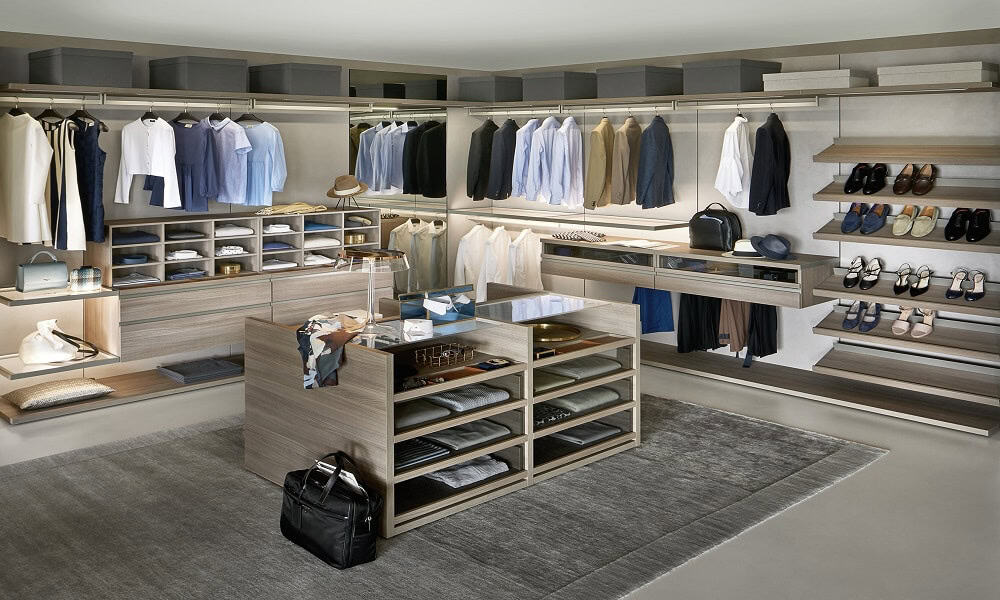
01 Why it matters
The real challenge isn’t space—it’s making it efficient.
Many people think walk-in closets need a big room, but even a small space—just 5 by 7 feet—can work well if it’s designed thoughtfully. The key difference between a walk-in that improves your routine and one that just collects clutter is always the layout.
Wasted corners, single-hang sections packed with clothes that could be double-hung, and flat shelves where angled shoe displays would work better—these are all problems you can fix. The real transformation comes from designing the closet to fit your actual wardrobe, not just following a standard plan.
Zone by category
Separate long-hang, double-hang, and folded sections. Visible organization begins with clear zones before any storage piece is added.
Use full height
Built-in storage from floor to ceiling makes use of space that store-bought units often miss. Upper shelves are perfect for seasonal or rarely used items.
slands & peninsulas
A central island with deep drawers gives you space for jewelry, folded sweaters, and accessories, all without taking up wall space.
Lighting as a function
LED strip lights inside cabinets and built-in wardrobe lighting remove shadows, which is essential for seeing colors clearly at any time of day.
02 Design principles
The details that define an exceptional walk-in.
In our best closet designs, the built-in features look and feel like fine furniture. We choose materials that not only store your clothes but also match the room’s style. Hardware is carefully chosen, drawers glide smoothly, and every surface feels inviting to touch.
These are the principles that separate a custom walk-in from an off-the-shelf system:
Measure carefully, then double-check your measurements.
Closet design begins with precise measurement of your actual wardrobe, not average statistics. Count your long garments, your double-hang items, your shoes, your folded pieces. The layout follows the inventory.
Match material to purpose
Open shelving in glass or lacquered wood keeps accessories visible. Closed drawer fronts in a matching finish maintain calm in the room. The interplay of open and closed is as much an aesthetic choice as a practical one.
Design for breathing room
The best closets never look stuffed. Plan to leave about 20 percent of each section empty for new items, seasonal changes, and to keep the space comfortable to use.
Integrate the mirror deliberately.
A full-length mirror isn’t just for looks—it’s a smart design choice. Placed to catch natural or overhead light, it makes the room feel bigger and completes your dressing area.
Plan for power early
Plan for things like built-in lighting, a charging station, or a steamer outlet before the closet is built, not after. Consider your whole daily routine before making final decisions.
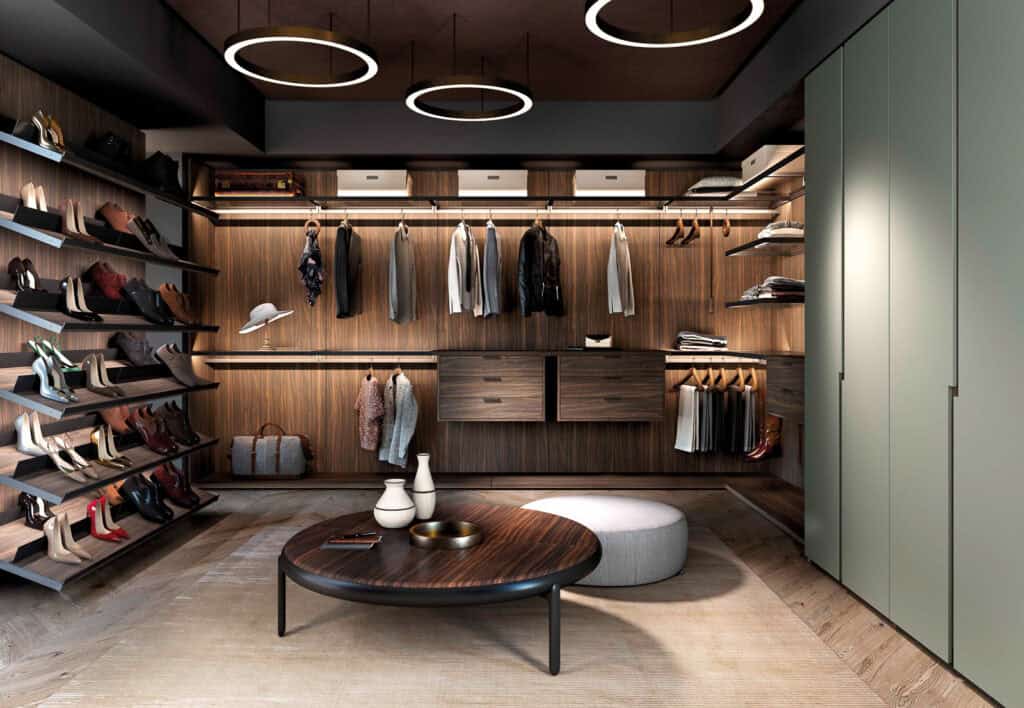
3 Finishes & materials
Choosing materials that age with the home.
The finishes in a walk-in closet should match the style of the rest of your home. At Urban Homes, we use high-quality materials from our Italian and European partners—the same level you’d find in a kitchen by Aster Cucine or a SanGiacomo wardrobe. Natural wood veneers like white oak, walnut, and limed finishes add warmth and unique grain that lacquer can’t match. High-gloss lacquers in shades like bone, soft greige, or deep charcoal give a modern look. Details like velvet drawer liners, brushed-brass handles, and smoked-glass panels add a touch of real luxury. “The closet that looks like furniture — that is the standard we hold ourselves to on every proj