
By Urban Homes Design Team
Published by Urban Homes NYC | Updated 2026
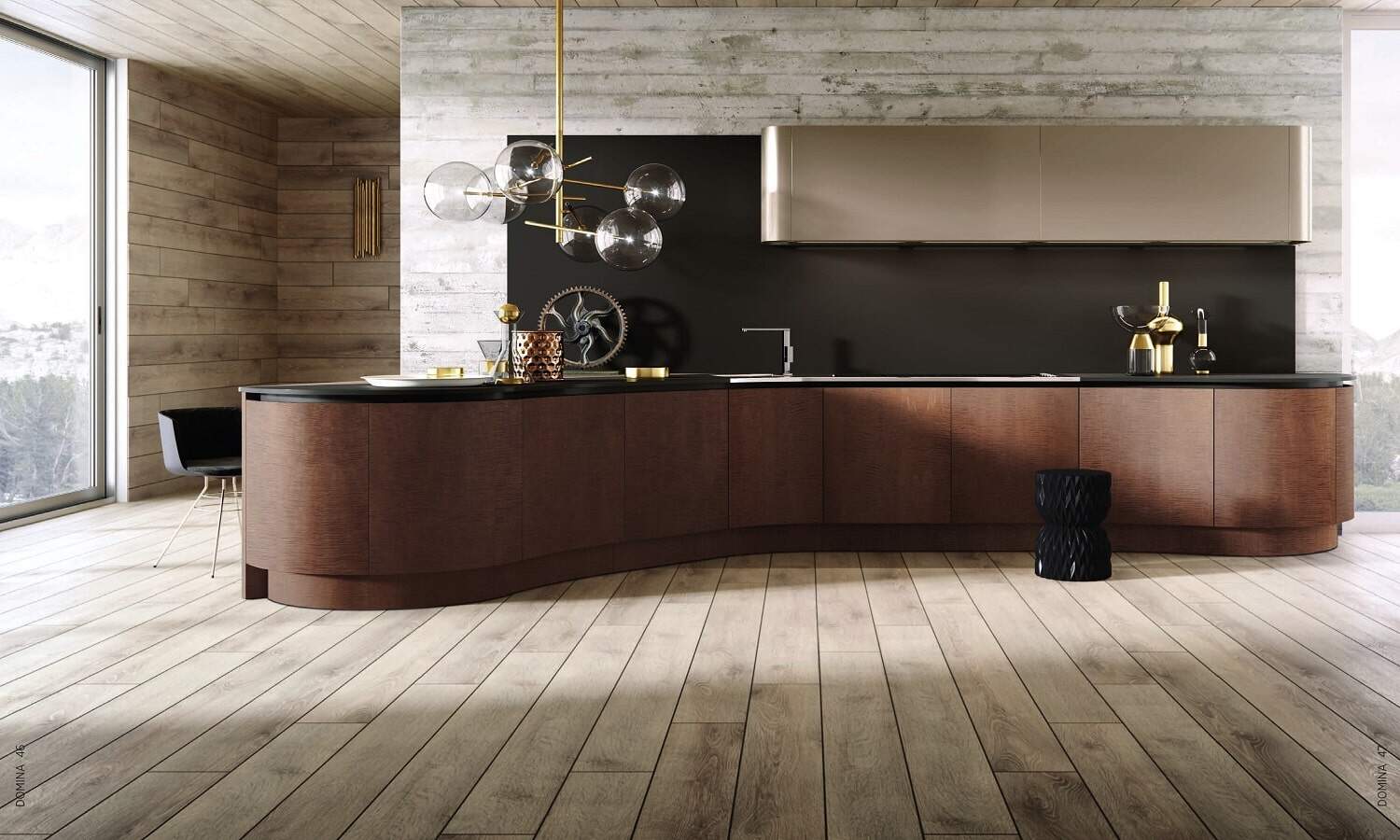
Key Takeaways
- Because of its frameless design, European cabinets provide up to 15 per cent more usable space than conventional face-frame cabinets.
- Easy to look after: The flat slab doors give a continuous and smooth appearance and can be wiped clean.
- For those who prefer a sans-handle design, J-pull channels or push-to-open latches provide a completely minimalist appearance.
- There are three design traditions: in Germany cabinetry stresses precision engineering, in Italy it focuses on bold luxury, and in Scandinavia simple lines are combined with warm, natural woods.
Framed vs. Frameless Cabinetry: The Key Difference
What gives the European kitchen its special character is not the place in which it is made but the way it is constructed. Traditional American cabinets have a face frame, which is a solid wood border about 1.5 inches wide along the front of the cabinet box. European cabinets, on the other hand, omit the border and have a frameless design.
- The analogy in terms of a picture frame: a cabinet with a frame is similar to a photograph within a thick wooden frame, while a cabinet without a frame is like a print with no border, the image extending all the way to the edge.
- Doors with a full overlay: Since there is no frame to get in the way, the slab doors are fitted directly to the sides of the cabinet and completely cover the cabinet with even and tight gaps.
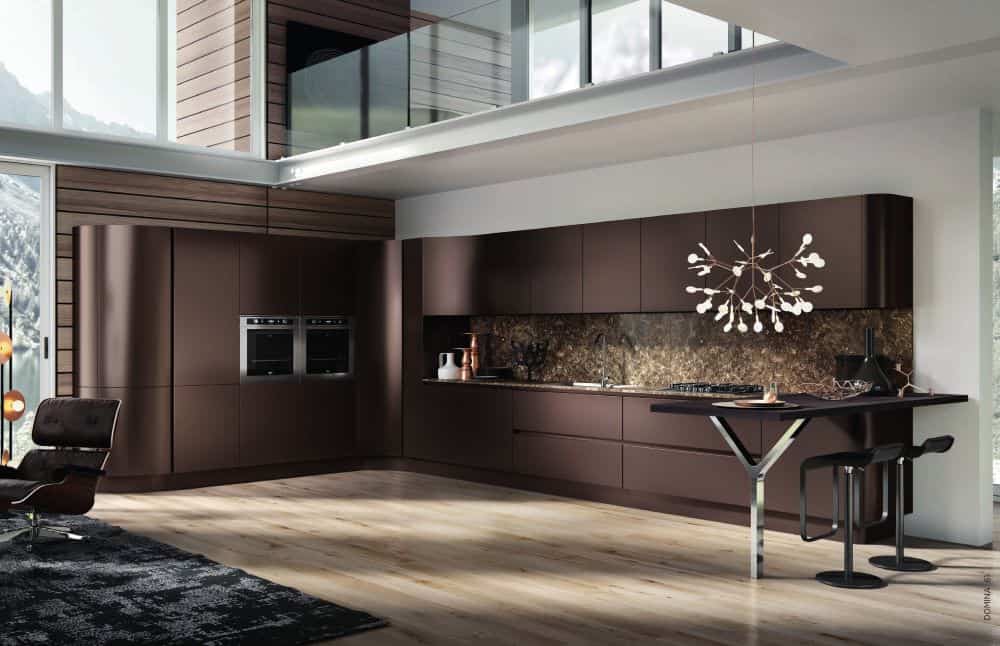
Framed vs. Frameless Comparison
| Feature | European (Frameless) | Traditional American (Framed) |
| Construction | No face frame; hinges attach directly to box walls | Solid wood frame attached to front of box |
| Storage Capacity | Up to 15% more interior volume; wider drawer openings | Reduced width and height clearance due to frame lips |
| Visual Style | Ultra-clean, modern, full overlay | Classic, transitional, or shaker style |
| Cleaning & Upkeep | Smooth, flat wipe-down; no dust-trapping grooves | Dust and grease collect on frame edges |
Slab-Front Doors and Handleless Mechanics
The kitchen’s modern minimalist style uses slab-front doors—single, flat panels with no decorative bevels, recessed panels, or grooves. These fronts not only create a continuous line, but also offer practical advantages for everyday cooking and easy maintenance.
Choosing Your Handleless Opening Mechanism
To keep cabinet doors in continuous use, many homeowners choose to get rid of conventional hardware. The clean look desired can be achieved with two main systems:
- The Integrated Channel (J-Pull) involves creating a straight channel in the top or side of the door so that your fingers have an invisible edge. This mechanical method has no moving parts and leaves no fingerprints on the surface.
- Spring-loaded or magnetic push-to-open latches push the door open when gently touched, creating a completely flat surface that suits narrow kitchens or galley arrangements where hardware could catch on clothing.
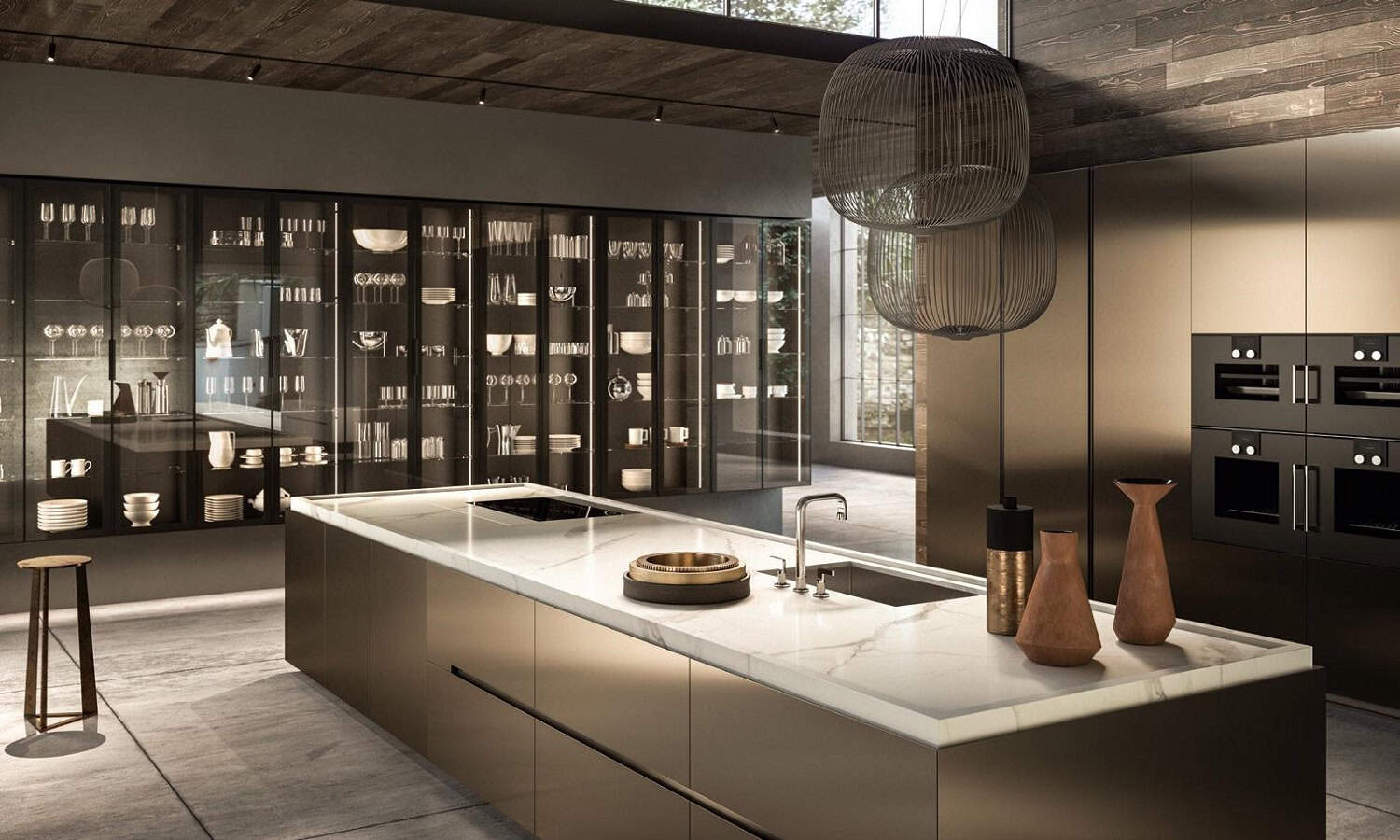
Contemporary urban home kitchen with a large island, modern appliances, and stylish decor, perfect for modern living and entertaining guests. European Design Personalities: German, Italian, and Scandinavian
While “European design” implies a single aesthetic, three distinct national philosophies shape the luxury kitchen market:- German precision: The equipment is designed in the style of high-performance machinery, with manufacturers paying attention to heavy-duty drawer slides, soft-close alignment, and modular efficiency all built to last for decades.
- Italian fashion features luxury statement design with exotic veneers, high-gloss lacquer, and bold sculptural silhouettes, elevating the kitchen to an architectural highlight.
- Scandinavian style: Simple in appearance but welcoming, featuring light-coloured woods (such as white oak and ash), neutral color schemes, and a good use of natural light.
What Is the Real Cause of the Cost of European Cabinets?
The fact that the structure has no frame doesn’t mean that European cabinetwork is automatically more expensive; the differences in price come about as a result of the materials chosen and the extent of customization:- Savings-oriented: Choose frameless cabinets with doors made from durable laminate or thermofoil.
- Mid-Range: Semi-custom frameless boxes available in acrylic, textured laminate, or matte lacquer finishes.
- In the luxury or high-end category, fully custom systems are imported from Italy or Germany and feature hand-polished lacquer, real wood veneers, and motorized push-to-open mechanisms.
Your Pre-Design Checklist
Before visiting a design showroom, complete these three planning steps:- Set your main priority: decide whether your primary aim is maximum durability for the family, bespoke luxury in appearance, or staying within your target budget.
- Collect visual inspiration by saving 5 to 10 photos that match your preferred style (for example, German functional, Italian high-gloss, or Scandinavian wood tones).
- To experience the test mechanics, please visit our showroom in New York City and manually open the J-pull channels and push-to-open drawers to discover the kind of tactile response you prefer.