
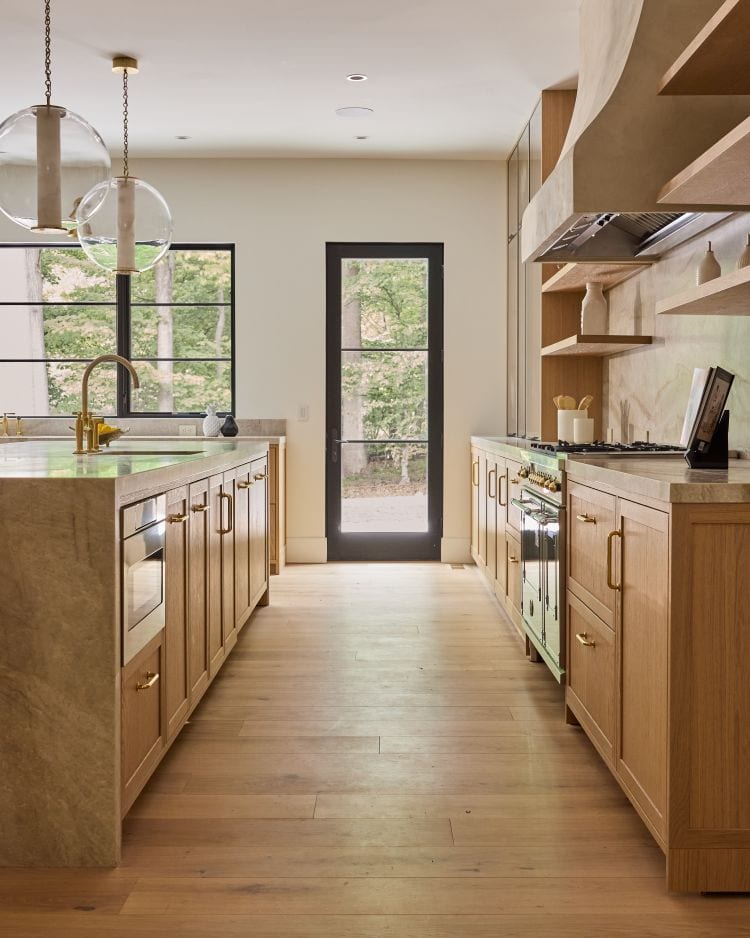
New York City kitchens present design challenges that rarely appear in a typical suburban home. Limited floor space, structural columns, unusually high ceilings, building regulations, and the relationship between the kitchen and living areas all shape cabinetry design. At Urban Homes, we’ve designed and supplied custom kitchens in New York City since 2005. Working with homeowners, architects, and interior designers across Manhattan, Brooklyn, and the surrounding area, we’ve seen how luxury kitchen design has evolved—and which features genuinely improve the finished space.
Today’s most interesting kitchens combine European cabinetry, carefully selected materials, integrated appliances, and storage designed around the homeowner’s daily routines.
The Move Toward Architectural Cabinetry
A standout feature of kitchen design in New York City is the way cabinetry is built right into the room’s architecture.
Designers now build continuous walls of cabinetry that include refrigeration, pantry storage, and sometimes doors to other rooms. Instead of treating upper cabinets, base cabinets, and appliances as separate pieces, they combine them into a seamless design. In Manhattan bedrooms with 10- or 11-foot ceilings, tall cabinets make use of the extra height and help keep the room looking neat. Ceiling-height cabinets require careful planning. Designers must consider how people will reach the upper storage, any uneven spots in the ceiling, ventilation, and how much space is needed for installation. European companies offer cabinetry systems with built-in handles, sleek door designs, wood veneers, lacquer finishes, and customizable features that make these architectural styles possible.
Natural Wood, Matte Lacquer, and Stone
The all-white, high-gloss kitchen is no longer the standard option in modern luxury interiors. Texture and contrast are now achieved with natural oak, walnut, smoked wood veneers, and warm matte lacquers. We particularly prefer a combination that features natural wood veneer on the tall cabinets, matte lacquer on the island, and a natural stone countertop.
Material selection also has practical implications:
- Natural wood veneer gives off a genuine grain and a warm appearance; since it is a natural material, there will be variations in colour and grain.
- Matte lacquer provides a smooth, uniform finish and a wide range of color options. Surface care is important, particularly with darker finishes.
- Textured laminate can imitate the look of wood, stone, or other materials while offering a practical, usually low-maintenance surface for cabinets.
- Quartzite is often chosen for its unique natural patterns and durability, though performance and maintenance needs vary by stone type.
- Marble has a classic look but is more susceptible to acid etching and staining than many other countertop materials.
Base the decision on how the kitchen will be used, the desired appearance, and the homeowner’s expectations for maintenance.

Concealed Appliances and Functional Storage
Built-in refrigerators have become a staple in many upscale New York City kitchens. Panel-ready refrigerators from brands like Sub-Zero fit into tall cabinets, making the front of the appliance align with the surrounding cabinet doors. Give the same attention to detail when planning appliance garages and pocket-door cabinets. A pocket-door cabinet can hide a coffee station, toaster, or other frequently used appliances. When opened, the doors slide into the sides of the cabinet, letting you use the counter space as usual. Before designing this feature, choose which appliances you want to include and confirm you have enough electrical access, ventilation, and space for heat to escape.
For everyday storage, deep drawers are often easier to use than standard base cabinets with shelves. Quality drawer systems, such as Blum LEGRABOX, can hold pots, pans, dishes, utensils, and custom organizers.
Designing the Right Kitchen Island for an NYC Apartment
Although an oversized island might look impressive in a rendering, it can cause problems with the flow of a completed apartment. A useful goal when planning many kitchens is to provide about 42 inches of clear space in front of the island; where several people cook regularly, 48 inches might offer better access. The exact dimensions will depend on the appliance doors, accessibility, and the actual layout. We also need to consider seating. For comfortable knee room, a countertop overhang of about 12 to 15 inches is generally used, the exact figure depending on the height of the counter and the design of the stool. In smaller apartments, a peninsula can offer more usable storage and counter space than a freestanding island.
The island should be designed around specific activities:
- Food preparation and cleanup
- Seating and entertaining
- Cookware and utensil storage
- Small-appliance storage
- Wine refrigeration, where space permits
Putting all the possible features on a single island usually does not lead to the most practical outcome. An effective arrangement should focus on the functions that the homeowner uses most often.

Custom Cabinetry for NYC’s Unusual Spaces
Unlike newly built properties with standardized room dimensions, many NYC properties need cabinetry to fit existing architectural features. Brownstones in Brooklyn can have uneven walls, narrow rooms, or original architectural features. Brownstones in Brooklyn may have uneven walls, narrow rooms, or original architectural details. Lofts in Manhattan may have structural columns, exposed mechanical systems, and unusually high ceilings. With custom cabinetry, designers can adjust the widths, heights, depths, and the interior arrangements to meet these conditions. For instance, a small area next to a refrigerator could have a pull-out pantry, and a structural column may be incorporated into a continuous cabinet design. Accurate field measurements are necessary. After securing the initial design retainer, Urban Homes includes precise site measurements and technical drawings in its design development process. They use them to coordinate the cabinetry with appliances, plumbing, electrical work, and adjacent construction before placing orders.
European Kitchen Design and American Living
By concentrating on cabinet proportions, high-quality finishes, and built-in storage, Italian kitchen manufacturers have influenced modern interior design.
It is necessary when designing an Italian kitchen for a New York home to take into account American appliance sizes, local cooking habits, and the requirements regarding installation.
Aster Cucine has a number of collections, including modern architectural cabinetry and traditional styles such as Domina, Contempora, Brera Academy, and Quintessence.
The variety of door styles, veneers, lacquer finishes, and special cabinet options homeowners can choose depends on the collection and how it is configured.
What NYC Homeowners Should Consider Before Ordering a Luxury Kitchen
The biggest expense-earning errors usually occur before the cabinetry is delivered to the job site. When living in a co-op or condominium, home owners should make sure that they know the building’s rules regarding renovations, the permitted hours for work, the procedures for deliveries, and any restrictions which apply to changes to the plumbing, ventilation, or electrical systems. The models for appliances should be chosen early on so that they can coordinate with the cabinet drawings. It is possible to encounter costly complications if a refrigerator or a wall oven is changed after the cabinetry has entered production. The material samples should also be examined under the same lighting conditions as those found in a real home, since wood veneers, lacquer colors and stone look very different when viewed under showroom lighting as compared with residential lighting. The cabinetry supplier, the architect, the contractor, and the appliance installer should all work from coordinated drawings. A kitchen that is well manufactured can still run into troubles if the actual site conditions or the positions of the utilities differ from those in the approved plans.