
Traditional Kitchen Cabinets in NYC
Cabinetry built the way it was built before it was mass-produced
Two manufacturers, two ways to build a traditional kitchen

Wood-Mode: seventy-five years of American cabinetmaking

Aster Cucine — Italian classic, and we are the exclusive North American distributor
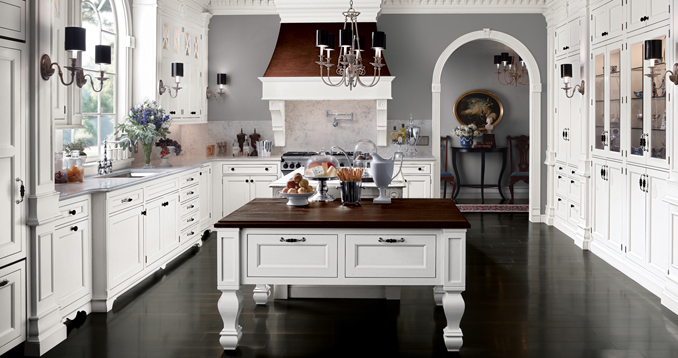
- Portrait is Aster’s traditional range and the one of the three most similar to a period kitchen; it follows what Aster refers to as a “back to country” style, featuring warm timber, framed doors, and materials that have the appearance of having been used rather than being arranged for effect. This collection is very suitable for a brownstone or country house if you would like the kitchen to seem older than the renovation.
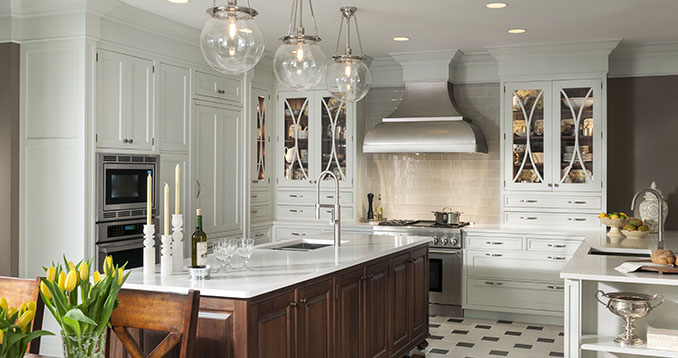
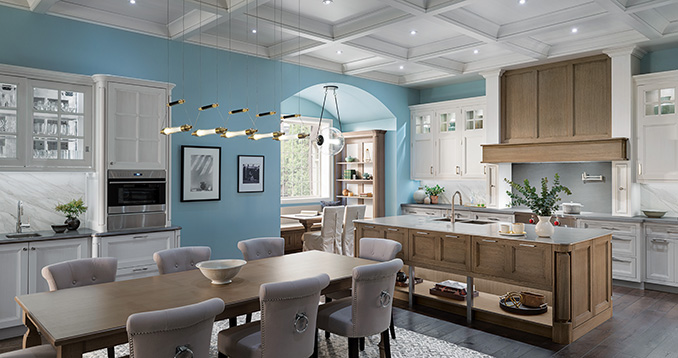
- Avenue is the collection that Aster has created as a transitional range, the name being taken from the Champs-Élysées and its purpose being to act as a link between different periods. It includes rich wood veneers, lacquered and metal finishes as well as classic hardware, but with simpler details. The collection is suitable for use in an apartment which has crown moulding and herringbone floors since otherwise the full period cabinets could appear overwhelming.
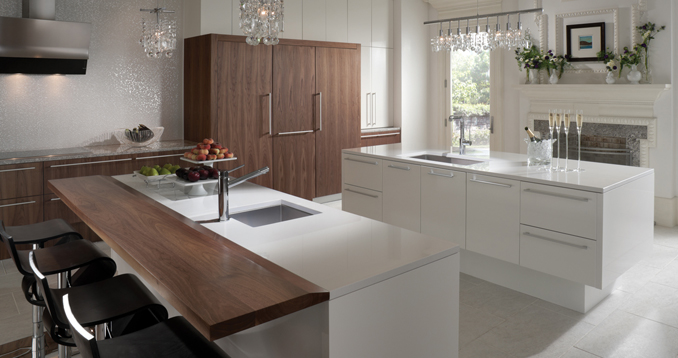
- Luxury Glam is the most decorative of the collections and draws its inspiration from Art Deco; it includes gold and silver metalwork, glossy lacquer, mirror glass, leather panels, and fine veneers. Although it is not traditional in a national sense, it does show clear signs of classical influence. It is ideal for use in a penthouse or a pre-war apartment which has high ceilings.
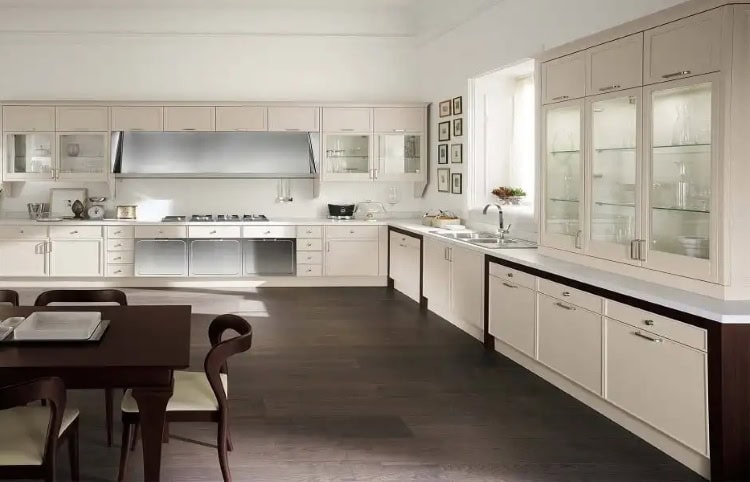
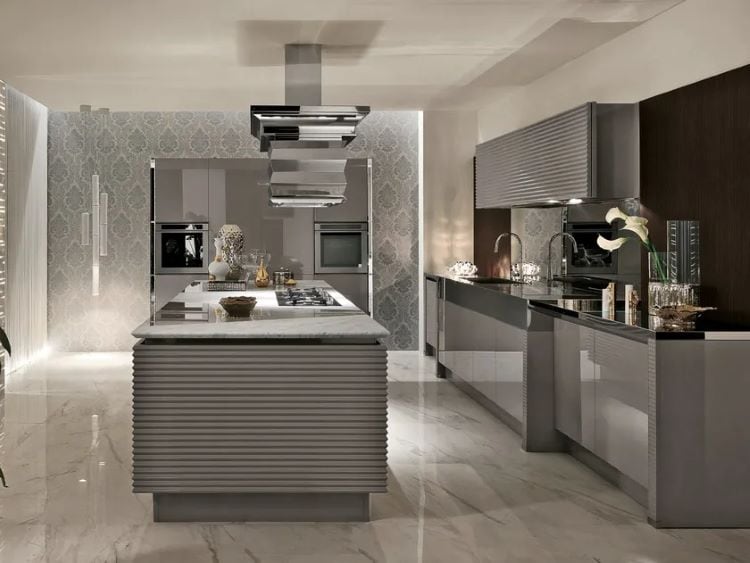
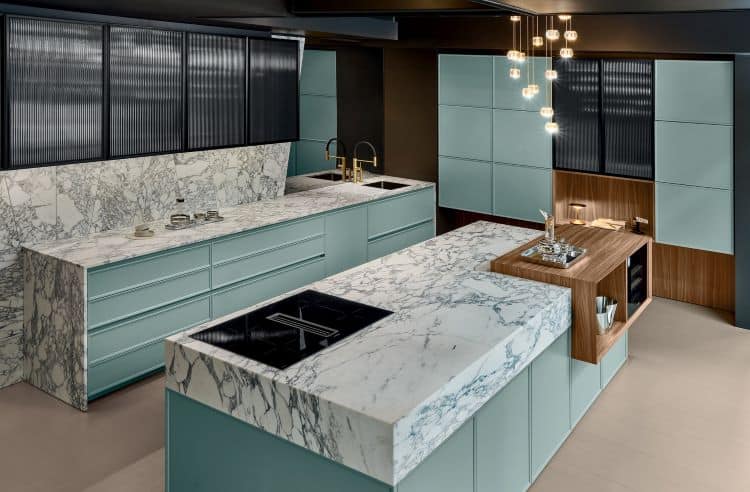
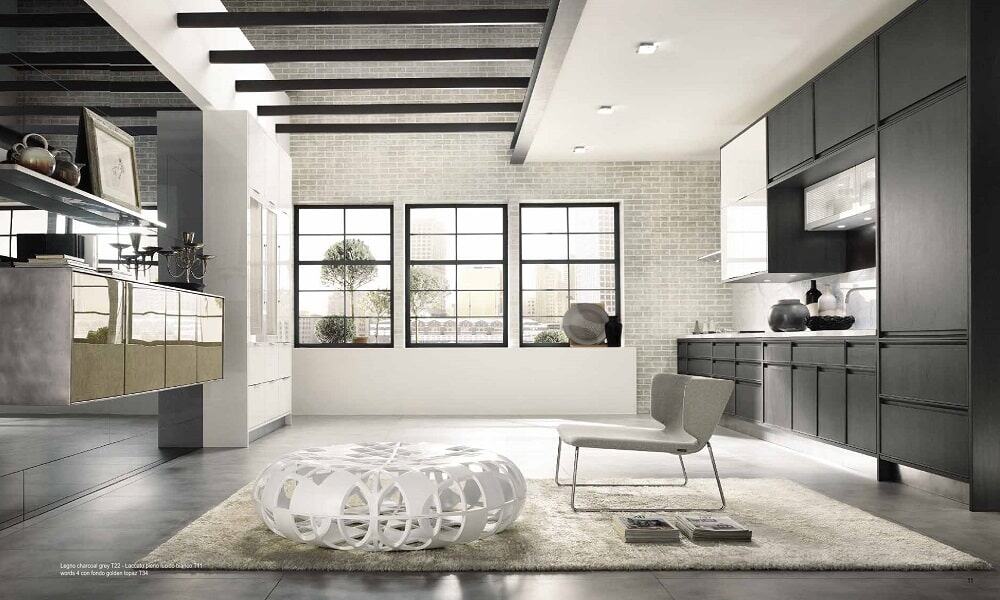
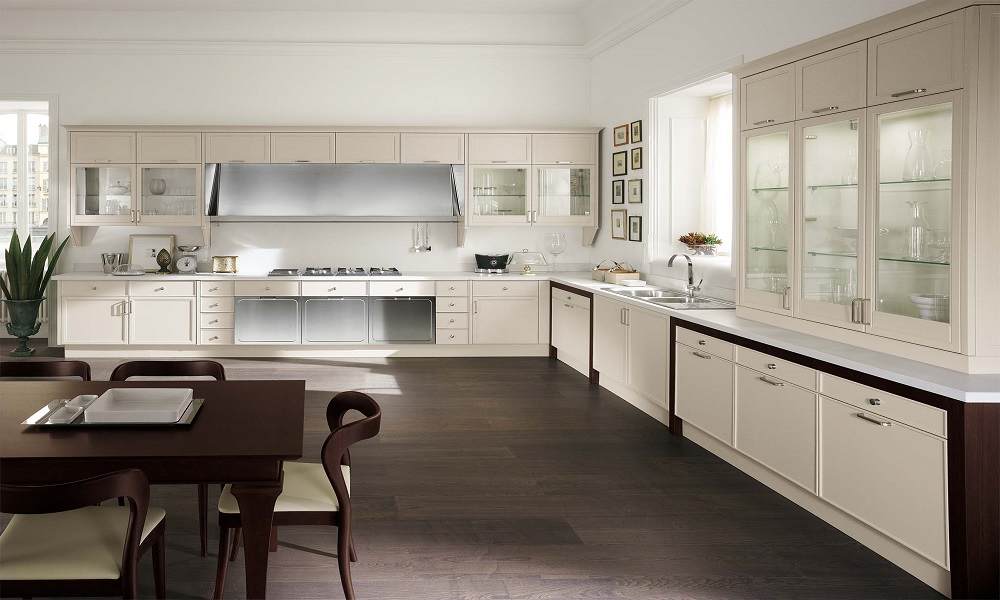
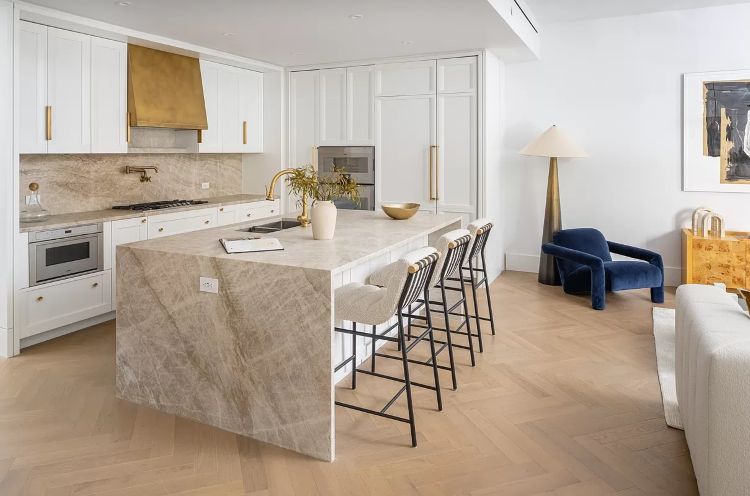
Both makers build genuinely traditional kitchens. The honest difference is what tradition each one is referring to.
Wood-Mode | Aster Cucine | |
Made in | Kreamer, Pennsylvania | Pesaro, Italy |
Tradition it references | American — Shaker, Federal, Colonial Revival | European — fitted furniture and paneled rooms |
Construction | Face frame; inset or full overlay | Framed panel within a furniture-led system |
Collections for traditional | Full custom to your drawing | Portrait, Avenue, Luxury Glam |
Signature finishes | Painted, stained, glazed, distressed | Veneer, lacquer, metal, mirror, leather |
Strongest in | Period-correct work; matching existing millwork | Continuous fitted rooms; decorative and Deco schemes |
Lead time | 8-12 weeks | 12 -18 weeks |
Door styles we specify most
- Raised panel — the center panel is proud of the frame with a shaped edge. The most formal option, and the one most people picture when they say “traditional”.
- Recessed panel — a flat center panel set into a molded frame—traditional detailing without the weight of a raised panel; the safest choice in a smaller room.
- Beaded inset — a bead run around the inside of the face frame: the most period-correct look available, and the most demanding to build and install.
- Shaker — square-edged flat panel, no molding. Technically traditional in origin, transitional in effect. Where most New York clients land.
- Glazed and mullion doors — for upper cabinets, display cabinetry and butler’s pantries.
Finishes
| Finish | What it does | Consider it when |
|---|---|---|
| Painted | Even colour, hides the grain, widest palette | You want the cabinetry to read as architecture rather than furniture |
| Stained | Grain stays visible; cherry, walnut, white oak, maple | The room has good natural light and you want warmth |
| Glazed | A tinted layer settles into profiles and corners, emphasising detail | Raised-panel or beaded doors whose shaping deserves to be read |
| Distressed | Deliberate wear applied before finishing | Rarely, in the city. More at home in a country house |
| Two-tone | Painted perimeter with a stained or contrasting island | The most-requested traditional treatment of the last five years |
Traditional cabinetry in a New York apartment
- Traditional cabinetry is usually taken photographs in large suburban kitchens which have nine-foot ceilings and contain no structural surprises; most of our work in the traditional style is carried out in more difficult situations—such as a pre-war apartment on Central Park West, a Brooklyn brownstone, or a Village co-op whose kitchen is nine feet wide and which has rules regarding when you can use the freight elevator.
- The limitations have an effect on the design rather than stopping it. If the ceiling height varies by an inch within a single run then the crown has to be scribed on site rather than being cut according to the drawing. A radiator enclosure becomes part of the cabinetry instead of acting as something placed next to it. In cases where a full-depth base cabinet would make a narrow galley impractical, a shallower run with taller storage is able to regain the volume by going vertically.
- The way in which the building is carried out is just as important as the design; the co-op and condo alteration agreements determine the working hours, the insurance requirements, and usually also the delivery schedule. Since we have been carrying out installations in Manhattan and Brooklyn for 20 years within those rules, we work together with your contractor, architect, or managing agent as part of the project rather than leaving that responsibility to you.
Frequently asked questions about traditional kitchen cabinets
Q. What is the difference between traditional and transitional kitchen cabinets?
A. Traditional cabinetry uses period construction and detailing — raised or recessed panel doors, visible face frames, applied mouldings and crown. Transitional keeps the proportions and warmth but simplifies the detail, usually a Shaker door with contemporary hardware. Most New York kitchens we design land somewhere between the two.
Q. What is inset cabinetry, and is it worth the extra cost?
A. Inset means the door sits flush inside the face frame rather than on top of it, the way cabinetry was built before the 1950s. It costs more because the tolerances are tighter in both manufacture and installation. In a pre-war apartment or a brownstone it is usually worth it; in new construction, full overlay often serves the room better.
Q. What is the lead time on Wood-Mode cabinetry?
A. Typically 8 to 12 weeks from final approved drawings to delivery. Every cabinet is made to order in Pennsylvania, so the clock starts when the design is signed off, not when you first visit. Custom finishes and specialty doors add time.
Q. Will traditional cabinetry work in a small New York apartment?
A. Yes, with the right door. Recessed panel and Shaker doors carry traditional detail without visual weight, and full-height cabinetry recovers storage a small footprint loses. Heavy raised-panel doors with deep crown can overwhelm a nine-foot galley — that is a design decision, not a limitation on the style.
Q. Can you match existing millwork in a pre-war apartment?
A. In most cases, yes. We can work to the profiles of existing trim, doors and panelling so new cabinetry reads as original to the building. Bring photographs and, if possible, a physical offcut of the existing moulding to your first showroom visit.
Q. Which cabinet brands do you carry for traditional kitchens?
A. Two. Wood-Mode, made to order in Kreamer, Pennsylvania, for American traditional work — inset construction, face frames, painted and glazed finishes. And Aster Cucine, the Italian maker for which Urban Homes is the exclusive North American distributor, in its Portrait, Avenue and Luxury Glam collections.
Q. What is the difference between the Aster Cucine Portrait, Avenue and Luxury Glam collections?
A. Portrait is Aster’s traditional collection — warm timbers and framed doors on a “back to country” foundation. Avenue is transitional, bridging classic detail and modern lines with veneers, lacquers and metal finishes. Luxury Glam is the decorative end, drawing on Art Deco with gold and silver metalwork, gloss lacquer, mirror and leather.
Q. Do you work outside Manhattan?
A. Yes. We design and install throughout New York City, Bergen County NJ, Westchester, Fairfield County CT and the Hamptons. Roughly 60% of our projects are outside Manhattan.