
Why Curved Cabinetry Is Returning to Modern Kitchen Design
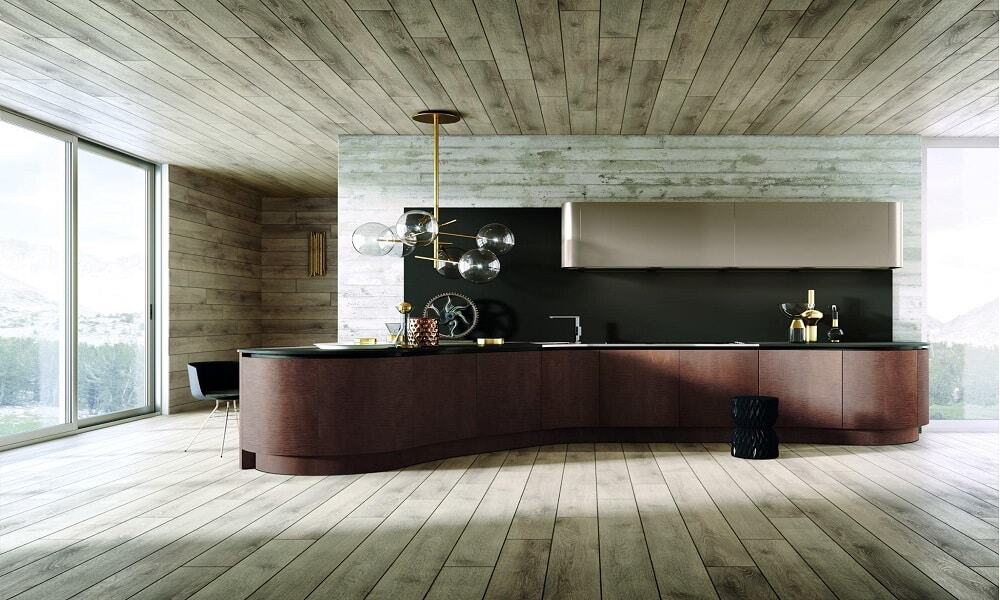
Curved Cabinetry: The New Trend in Kitchen Design
A transition from sharp minimalism to organic warmth
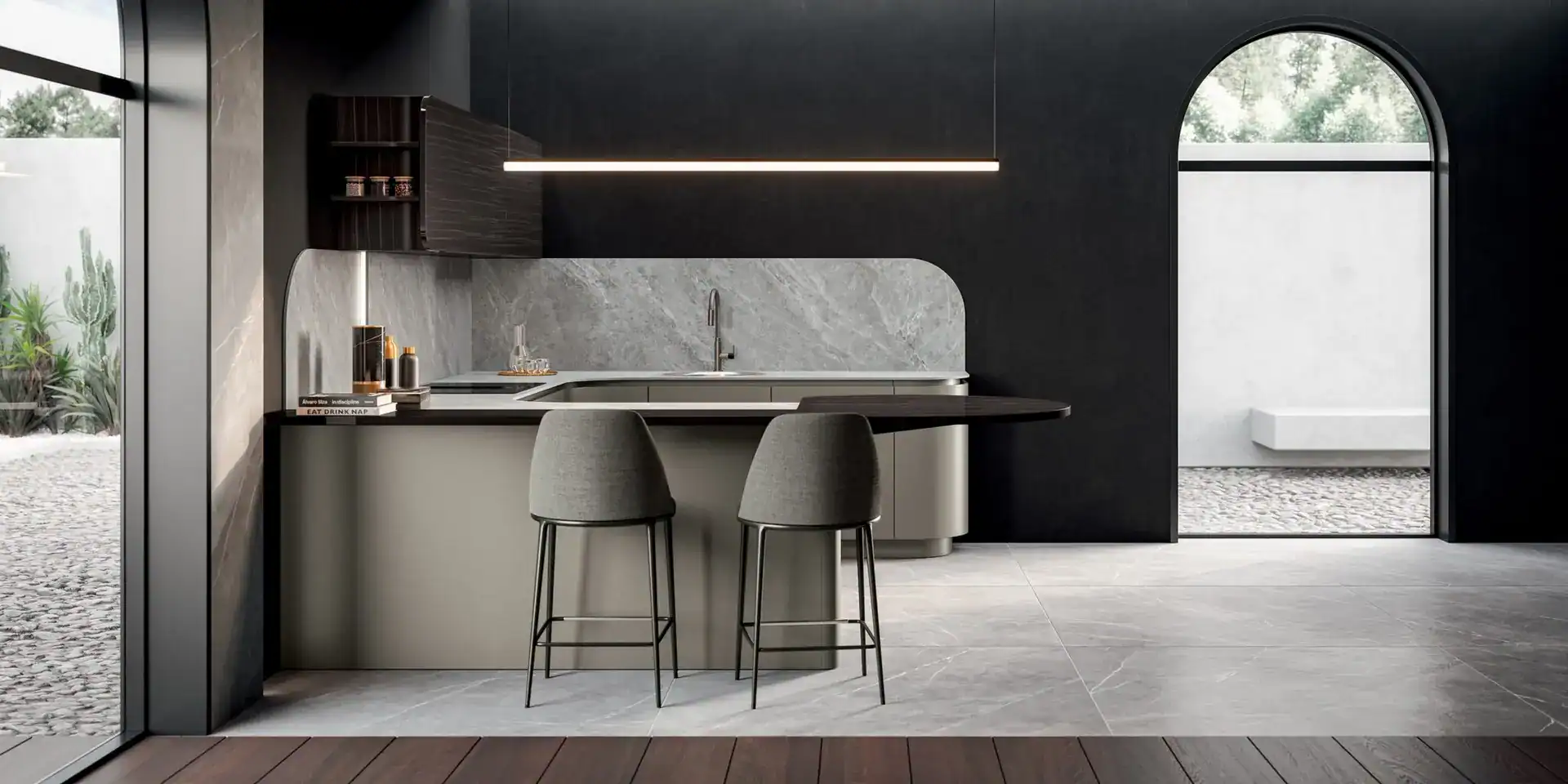
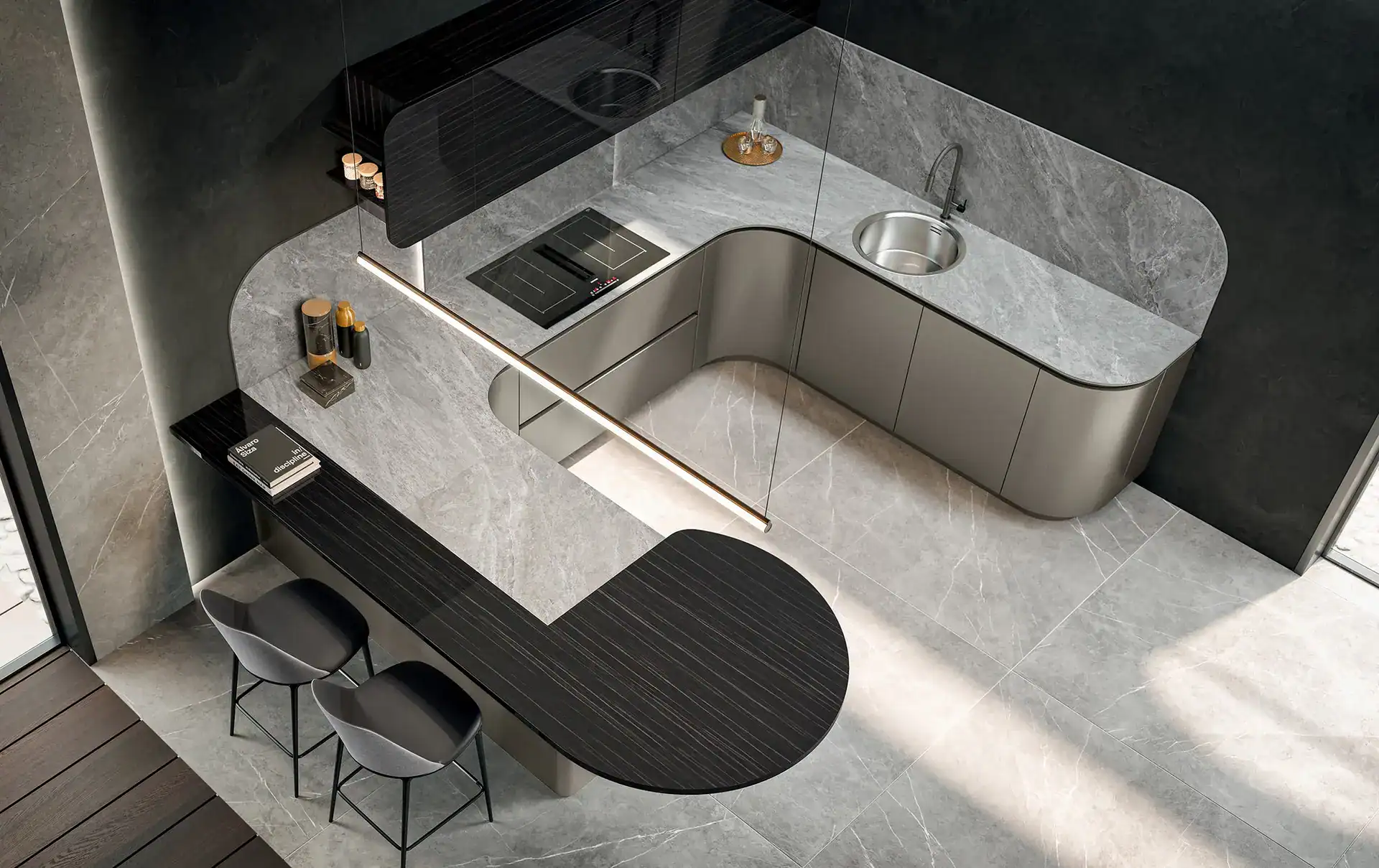
A Return to Human-Centered Design
Curved cabinets bring warmth and movement into a space. Unlike strict linear layouts, rounded forms feel intuitive and welcoming—designed for how people actually move through kitchens. In open-plan homes and urban apartments, curves naturally guide circulation and soften transitions between kitchen, dining, and living areas.
Softening Architectural Sightlines
Psychological & Ergonomic Comfort
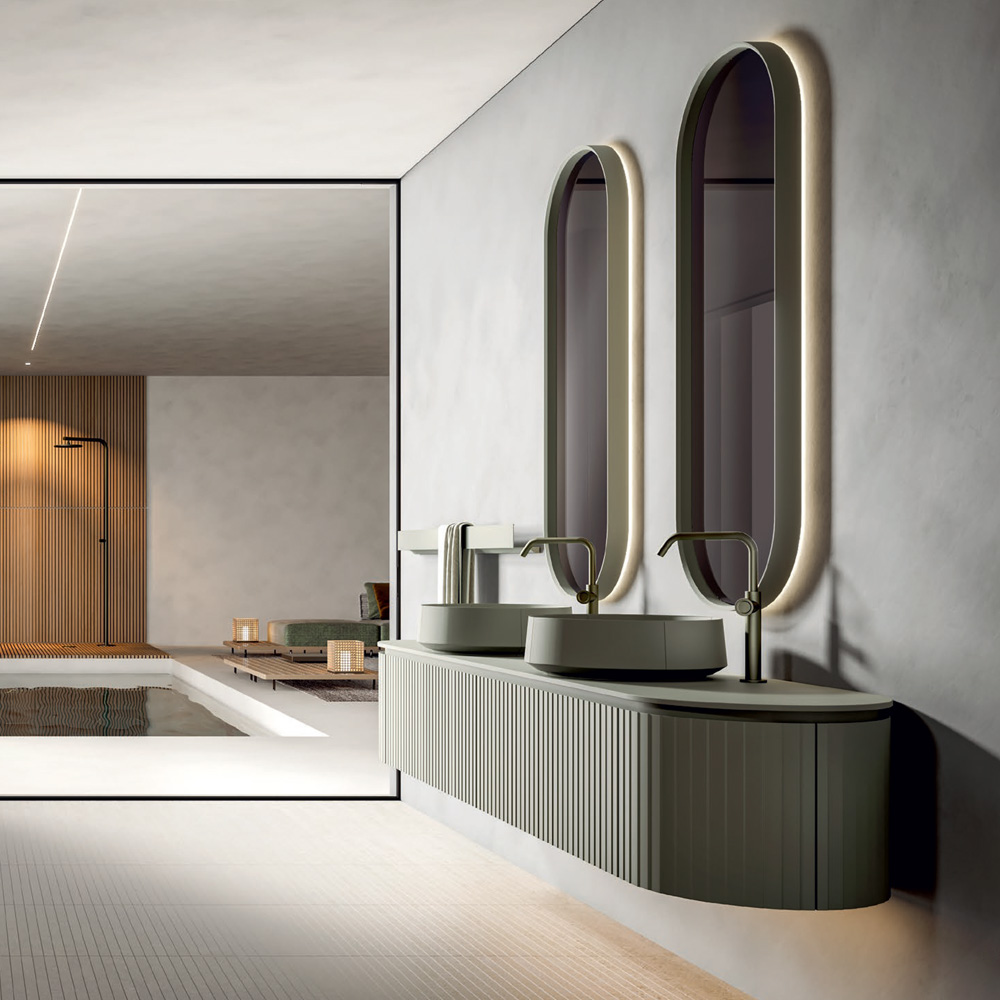
Where Curved Cabinetry Works Best in the Kitchen
- By fitting curved base cabinets in place of the square corners of the island, the paths around the island become softer and the overhangs where people sit appear more inviting and accessible.
- The radius doors which extend from floor to ceiling give a sculpted, column-like effect similar to that of custom architectural millwork.
- The upper cabinets, which are arched and curved, add a certain depth to the main prep areas by having them either concave or convex, at the same time helping to eliminate lighting shadows.
- Bar and beverage stations with a curved outline: by curving the external outline of a dedicated coffee or dry bar it can be made to stand out from the main cooking areas and thus have the appearance of luxury furniture that is self-contained.
Are the practical considerations of curved cabinetry worth it?
| Design Consideration | Standard Square Cabinetry | Custom Curved Cabinetry |
| Manufacturing Cost | Standard baseline catalog pricing | 20% to 40% higher (custom radius work) |
| Internal Storage Volume | Maximized 90-degree square volume | Slightly reduced usable square-foot interior volume |
| Countertop Fabrication | Straight cuts, lower stone waste | Precision digital templating & custom radius edge profile |
| Pathway Safety & Flow | Sharp corners in high-traffic channels | Smooth, hip-safe circulation around islands and pathways |
| Visual Footprint | Built-in utility appearance | Sculptural, furniture-grade architectural presence |
Manufacturing & Cost Realities
How Curved Millwork Is Fabricated
- Kerf-cut plywood and bentwood lamination involves placing thin layers of wood ply over precisely constructed radius forms, then bonding them together under hydraulic pressure so that they take on a permanent structural shape.
- By heating specialized high-density fiberboard it is possible to shape custom door profiles so that they have a flawless lacquered surface.
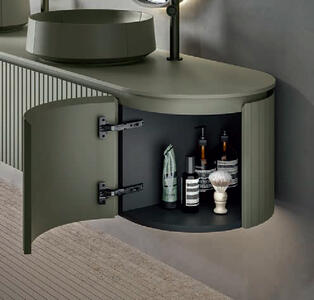
- Hinges which are specialized for use with Italian hardware and feature a concealed 3D adjustable mechanism designed for both concave and convex door shapes (for example, those made by Blum and Salice with radius fittings).
Countertop Templating & Stone Integration
Expected Budget Impact
Frequently Asked Questions
Q. Is the price of curved kitchen cabinets higher than that of standard cabinets?
A. Certainly. Because specialised wood-bending techniques are required for curved cabinetry, together with custom fabrication of the stone for the countertop edges and exact installation labour, it is usually about 20 to 40 per cent more expensive than standard square cabinetry.
Q. Does the storage space decrease with curved kitchen cabinets?
A. Curved end-cap units or radius island corners result in a slight decrease in internal volume when compared with 90-degree square cabinets, but high storage functionality can still be achieved by fitting modern internal pull-outs or by having the curves only on the island bases.
Q. Is it possible to fit soft-close hardware on curved cabinets?
A. Yes, the leading hardware manufacturers in Europe have developed special concealed hinges and drawer slides which are designed specifically for doors that are concave or convex, the result being that they provide a complete soft-close function.
Q. Which finishes look best on curved cabinet doors?
A. The radius curves are most effectively displayed through the use of textured vertical fluting, matte painted lacquers, and rich natural wood veneers such as walnut or rift-sawn white oak, since these features reflect light along the curved surface.