Contemporary European Kitchen Cabinets: A Complete Style & Design Guide

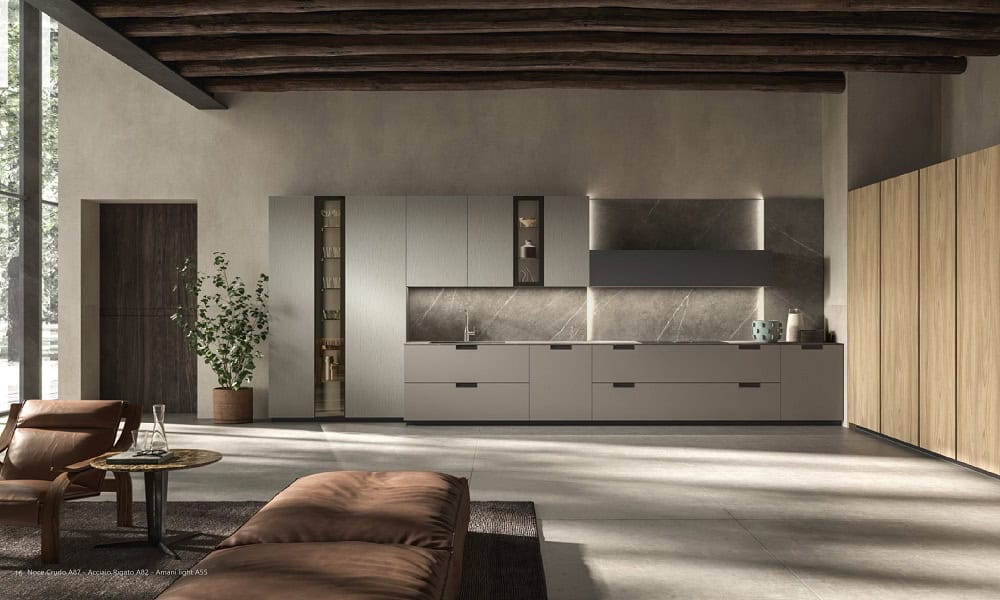
Today’s kitchen cabinets in Europe feature a frameless (full-access) design, flat-panel slab doors, handleless opening mechanisms, and built-in appliances ready to be fitted into panels. This type of frameless cabinet, which first appeared in war-torn Europe with the aim of making the best use of small floor areas, provides 10 to 15 percent more usable storage than traditional face-frame cabinets and, as a result, has become the standard against which modern luxury homes, Manhattan brownstones and contemporary apartments in New York City are measured.
What Are European Kitchen Cabinets?
European cabinetry today brings together precision engineering, minimalist styling, and functional ergonomics. Unlike American traditional cabinetry, which has a decorative wooden frame on the front of the cabinet, European cabinets use a frameless design with full access. In a frameless arrangement, strong concealed hinges are fastened directly to the inside sides of the cabinet box. Removing the face frame creates a smooth outer surface, wider drawers, and easier access to the contents.
Frameless vs. Traditional American Construction
| Feature | Contemporary European Cabinets | Traditional American Cabinets |
| Construction Type | Frameless (Full-Access Box) | Face-Frame (1.5″ Solid Wood Frame) |
| Door Aesthetics | Flat-panel slab, flush overlay | Raised panel, recessed Shaker, framed |
| Storage Efficiency | 10–15% more usable interior space | Restricted by frame lips and center stiles |
| Hardware Integration | Concealed 3D adjustable hinges, Gola channels | Exposed or semi-concealed hinges, surface pulls |
| Visual Footprint | Minimalist, clean horizontal and vertical sightlines | Traditional, decorative, segmented |
Key Features of European Kitchen Design
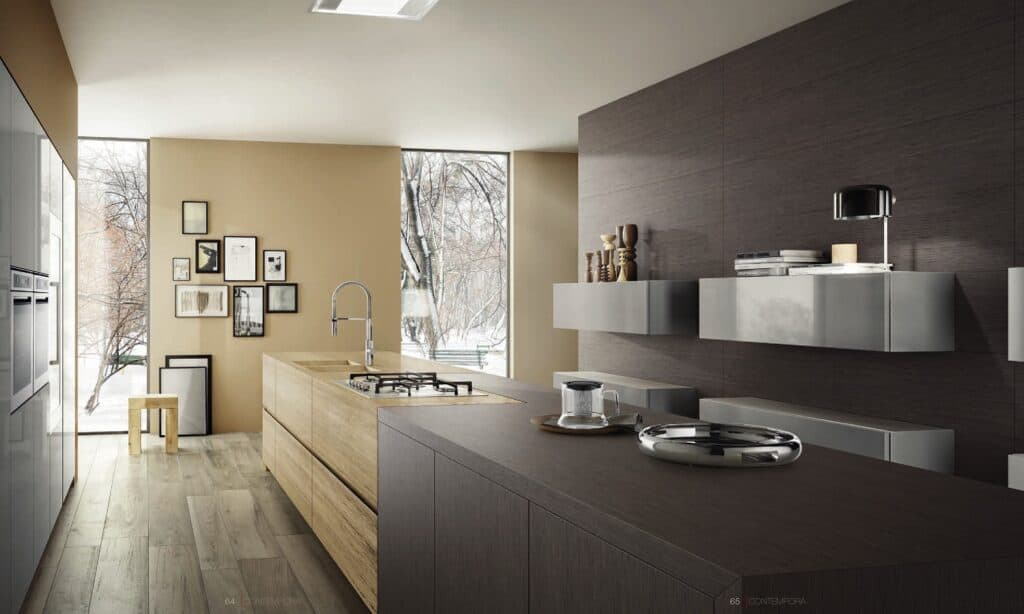
Hardware Without Handles and Simple Design
- The cabinet includes integrated Gola Channels in the form of recessed aluminium or black channels, which allow the door to be pulled open from the back.
- Doors’ edges bevelled (with cuts at 45 degrees): the top or side of the door is cut at an angle to form an invisible finger ledge.
- Mechanical and electronic Push-to-Open systems feature touch-sensitive latches which can be used to open drawers and doors by giving them a light tap.
Appliances that are ready to be installed and which are fully integrated
Ergonomic design with optimized interior storage
- Full-Extension Blum/Grass Drawer Systems are drawers with a high capacity which pull out entirely to provide full visibility.
- Blind-corner LeMans pull-out trays: These are trays which slide out of corner units thus ensuring that no space is wasted.
- Integrated Vertical Pantry Towers: Tall pull-out shelving systems with soft-closing mechanisms.
Popular Materials, Finishes & Textures
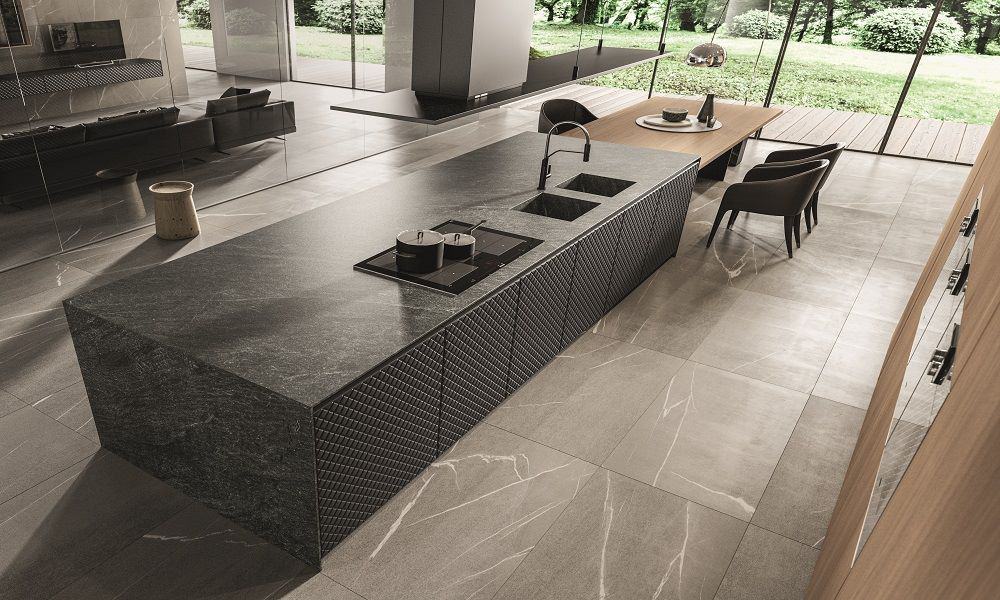
- Matte and high-gloss finishes: these are applied through a multi-coat process in order to achieve an extremely smooth surface; anti-fingerprint matte finishes (for example, FENIX NTM) are in demand in kitchens that see a lot of use.
- Architectural wood veneers involve the use of real wood layers, for example smoked oak, walnut, or eucalyptus, which are bookmatched across the faces of doors so that the grain patterns remain continuous.
- Structured melamine and laminates: These high-pressure laminates are able to imitate natural stone, concrete, brushed metal, or unprocessed wood and are extremely durable.
- Upper cabinets with a glass front, together with internal LED lighting, give urban kitchen arrangements more depth and brightness.
Spatial Planning & Installation Considerations
- When preparing walls in older buildings (for example, historic brownstones in New York City) it is often necessary to shim or fur the walls before fitting on cabinet tracks.
- European Suspension Rails are precise and involve attaching cabinets to continuous metal tracking systems, which enable micro-adjustments in three dimensions.
- For appliances designed to fit into a panel, you must coordinate with your kitchen designer, electrician, and plumber to confirm the exact rough-in depths.
Frequently Asked Questions
Are European kitchen cabinets strong and long-lasting?
Do frameless cabinets give you more storage space?
What is the correct way to clean and look after matte European cabinet finishes?
This text was prepared by the Design Team at Urban Homes NYC. If you want to see full-scale European kitchen displays, a variety of hardware options, and custom finish catalogs, please visit our Manhattan showroom located at 325 West 16th Street, New York, NY.