
How to Choose the Right Outdoor Kitchen
An outdoor kitchen transforms your backyard, patio, or rooftop terrace into a seamless luxury living space. With an array of layouts, appliance choices, and cabinet materials available across the Tri-State area, choosing the right setup requires balancing lifestyle needs with weather resistance. This comprehensive guide walks you through every essential planning decision—and explains why 304-grade and marine-grade 316 stainless steel remain the gold standards for long-term outdoor performance, especially in demanding coastal and urban environments.

Step 1: Define Your Outdoor Entertaining Style
- The family’s casual cooking setup includes a compact linear island with a premium built-in grill, some basic space for prep work, and sealed storage drawers, offering all you need for weeknight meals and informal weekend barbecues.
- When hosting on a large scale it is necessary to have a layout with multiple zones; you should include a high-BTU grill, side burners, an outdoor-rated refrigerator, a deep sink with running water, and built-in trash pull-outs so that the flow of people remains smooth.
- The cabinetry used in the tri-state area has to cope with the harsh weather conditions of the Northeast, including winter freezing temperatures, high humidity in the summer, rain, and snow. When choosing materials it is essential that both durability and thermal stability are given top consideration.
Step 2: Select the Ideal Layout
- Linear (Straight) Island: Suitable for small patios, the yards of urban brownstones, or rooftop terraces; all the cooking and utility connections run along one line, which makes the installation easy and means that it is simple to cover during the seasons.
- The L-shaped kitchen naturally separates the areas used for preparing raw food and cooking from those used for serving. It is ideal for using patio corners while still leaving room for outdoor dining tables.
- U-Shaped Layout: The best arrangement for serious outdoor chefs since it provides the maximum amount of counter space and includes three separate areas for prep, cooking, and refrigeration.
- Island featuring raised bar seating: Ideal for social hosts who want guests to sit comfortably away from the heat of the grill while still staying part of the conversation.
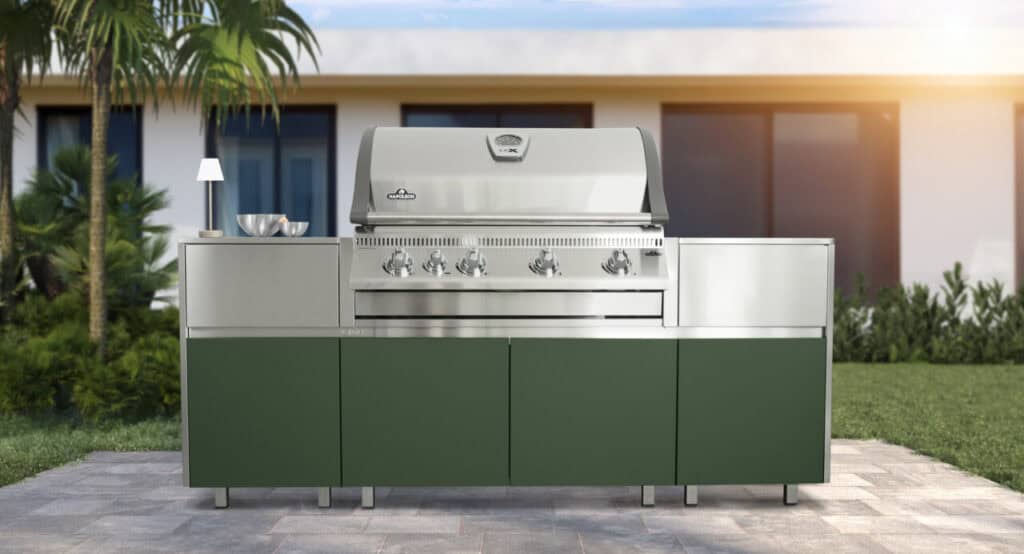
Step 3: Pick Your Appliances First (Before Touched-Up Cabinets)
Here’s a golden rule for outdoor kitchens: pick your appliances before you design the cabinetry. Cutout sizes, gas connections, and structural framing all depend on the exact models you choose. Ordering custom stainless steel cabinets around finished appliance specs ensures tight, weather-proof fits with no awkward gaps.
The Built-In Grill
The grill is the centerpiece of the whole setup. First, decide between natural gas (plumbed right from your house) or liquid propane tanks. Then, think honestly about how much food you cook at once. It’s always better to size up now than to realize two summers in that you need a bigger firebox—swapping it later means replacing cabinet panels. Make sure the grill hood and burners are built from 304 or 316 stainless steel so they don’t rust out after a couple of winters.
Side Burners & Specialty Add-Ons
Side burners are a lifesaver—they let you boil pasta, simmer sauces, or fry fish outside without running back and forth to your main kitchen (or heating up the house). If you want to push your cooking further, this is also where you plan space for a built-in pizza oven, a ceramic smoker, or warming drawers.
Outdoor-Rated Refrigeration
Don’t make the mistake of using a cheap indoor mini-fridge outside. They aren’t built for humidity or temp swings and will die quickly. Always look for UL-certified outdoor refrigerators. These come with heavy-duty insulation, forced-air cooling, and sealed 304/316 stainless steel exteriors designed to keep drinks cold during 90°F August days and survive sub-zero winter freezes.
Step 4: Pick Your Cabinetry (And Why Stainless Steel Rules)
Your cabinet boxes and door fronts take the brunt of the weather year-round. While wood looks nice at first and stone feels permanent, metal cabinetry is by far the easiest to live with over the long haul.
| Material | Weather Durability | Maintenance Level | What to Expect | Best Suited For |
| 316 Marine-Grade Stainless | Top-Tier (Shrugs off salt & chlorine) | Almost None | Won’t pit, rust, or corrode; built like a tank | Coastal homes, oceanfront decks, poolside setups |
| 304 Stainless Steel | Great (Handles rain & snow with ease) | Very Low | Holds up great; easy to wipe clean | Suburban backyards, city rooftops, standard yards |
| Masonry / Stone | Solid | Medium | Can crack with freeze-thaw cycles or absorb grease | Permanent heavy builds, warm climates |
| Aluminum Frames | Decent | Low | Can oxidize, scratch, or feel lightweight | Budget-friendly builds, dry areas |
| Wood (Teak / Cedar) | Low | High | Warps, greys out, needs yearly sanding & sealing | Covered spots if you love doing maintenance |
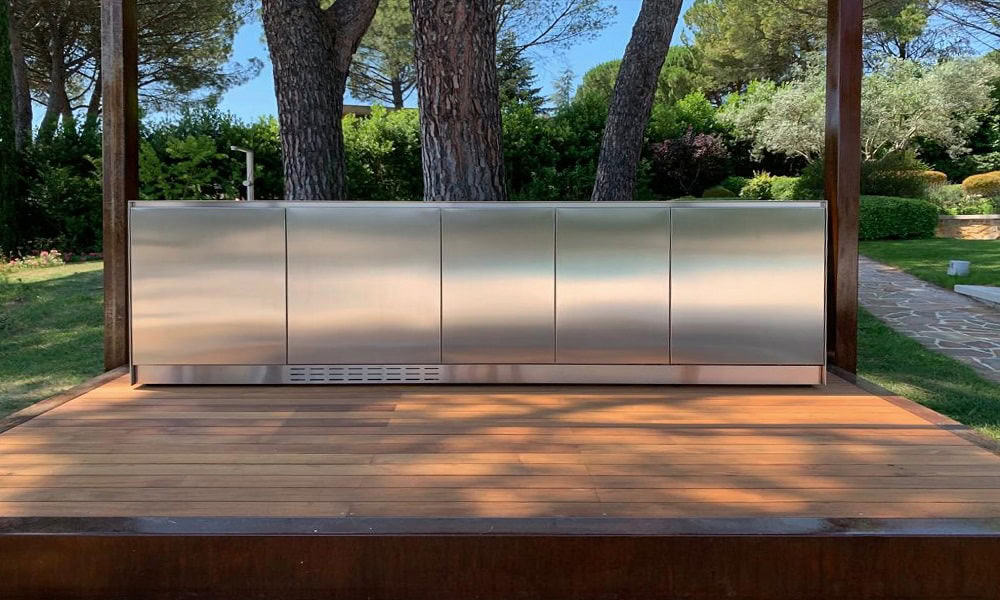
Why 304 Stainless Steel Outperforms Alternative Materials
- 304-grade stainless steel contains a high percentage of chromium and nickel, which causes the formation of a protective layer that excludes moisture, snow, and salty air; if you live near the coast, for example in the Hamptons or on the Jersey Shore, 316 marine-grade steel provides even better protection against saltwater.
- Stainless steel has excellent thermal stability and will not warp, blister, or lose its strength when exposed to the direct heat from gas grills.
- When preparing food outdoors you come into contact with raw meat, marinades, and debris. Since stainless steel is non-porous it doesn’t absorb bacteria, doesn’t allow mould to grow, and doesn’t retain food odours.
- Maintaining it is effortless: although wood has to be sanded and stained each year and stone needs to be resealed regularly, stainless steel can be cleaned simply using soap, water, and a microfiber cloth.
- Stainless steel cabinets available nowadays can have a powder-coated finish in any colour or be made to resemble wood; this enables you to have cabinets that are both strong and durable and at the same time look warm and inviting in your home.
Step 5: Critical Planning & Installation Details
- When choosing a countertop, select a non-porous and UV-resistant material like high-quality porcelain, quartz that is rated for outdoor use, or honed granite. Avoid soft limestone or porous marble since these can absorb grease stains.
- If your kitchen is situated under a covered patio, a pergola, or a roof, then you must use an appropriate outdoor vent hood in order to safely eliminate the heat, smoke, and gases.
- For the task and ambient lighting, fit low-voltage LED strips under the edges of the countertop and install spotlights above the area where cooking takes place in order to ensure that evening preparation is safer.
Frequently Asked Questions (FAQ)
Q: What is the difference between 304 and 316 grade stainless steel for outdoor kitchens?
A: 304-grade stainless steel is the premium industry standard for residential outdoor kitchens, offering excellent rust and heat resistance. 316-grade (marine-grade) stainless steel includes added molybdenum to withstand intense salt-air environments, making it ideal for oceanfront properties.
Q: Can outdoor stainless steel cabinets be customized with colors?
A: Yes. High-end outdoor stainless steel cabinetry supports architectural powder coating. This process bakes durable, UV-resistant color finishes or realistic wood-grain textures directly onto the steel surface.
Q: How much clearance is needed between a gas grill and outdoor cabinets?
A: Non-combustible stainless steel cabinets can sit directly adjacent to built-in grills. However, if combustible substrates (like wood framing) are present, an insulated stainless steel jacket grill liner must be installed between the firebox and the structure.
Planning a high-end outdoor kitchen project in the NYC, New Jersey, or Connecticut area? Contact the design specialists at Urban Homes NYC or visit our showroom to view luxury outdoor cabinetry systems in person.