
Choosing the Right Kitchen Countertop: A Complete Guide to Materials

Choosing a kitchen countertop is an important decision for both style and function. Countertops shape the look, feel, and durability of your kitchen, and they affect how well the space works every day. Here is a complete guide to the most popular kitchen countertop materials, starting with granite, and what to keep in mind as you pick the right one.


Granite
Granite is one of the most well-known and widely used natural stones for kitchen countertops. It is quarried directly from the earth, cut into slabs, and polished for use in kitchens.
Key Features:
- Natural beauty with unique veining and patterns
- Extremely durable and heat-resistant
- Scratch-resistant under normal use
- Adds long-term value to a home
Pros:
- Each slab is unique, providing a high-end, natural appearance.
- Handles heat from pots and pans without damage
- Long lifespan when properly maintained
Cons:
- Requires periodic sealing to prevent staining
- Granite is heavy and requires sturdy cabinet support.
- Natural variation may not suit all design styles.
Granite is well-suited for those seeking a timeless, natural material that offers durability and visual impact.
Quartz (Engineered Stone)
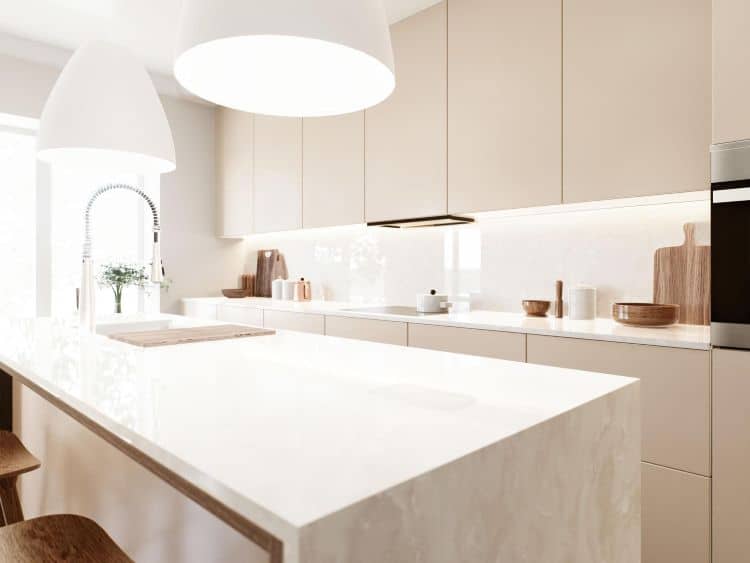
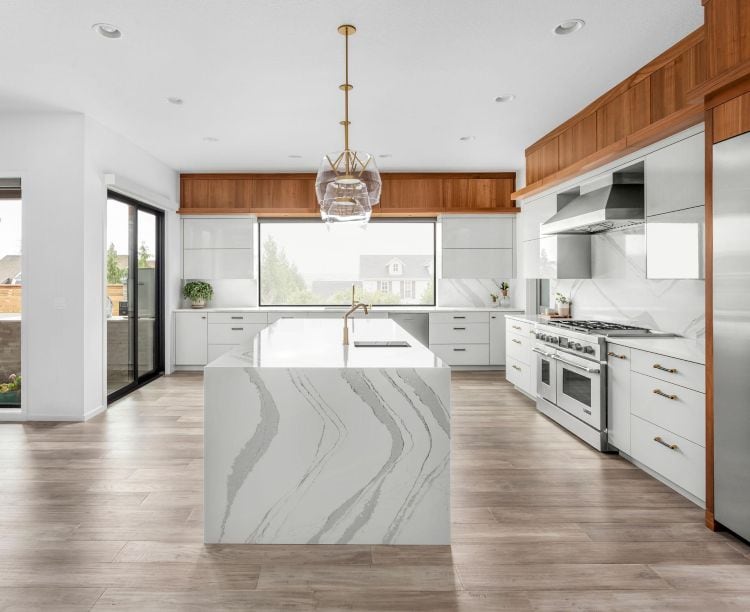
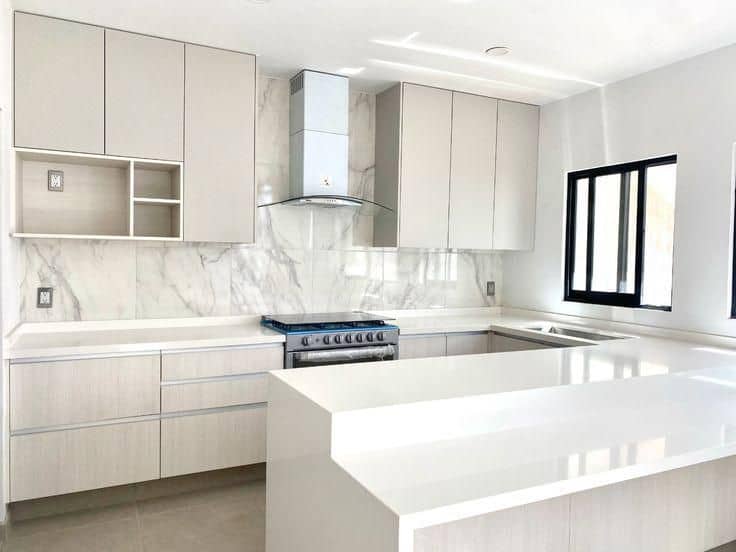
Quartz countertops are made by combining natural quartz crystals with resins and pigments to create a durable surface.
Key features of quartz countertops include:
- They do not absorb liquids and are highly resistant to stains.
- Quartz offers a consistent color and pattern throughout each slab.
- These countertops are low maintenance and do not need to be sealed.
Some advantages of quartz countertops are:
- They are easy to clean and help keep your kitchen hygienic.
- You can choose from a wide range of colors and finishes.
- Quartz is durable and resists scratches from everyday use.
However, there are a few drawbacks to consider:
- Quartz is less heat-resistant compared to natural stone surfaces.
- It does not have the unique patterns you find in granite or marble.
- Quartz can discolor if exposed to direct sunlight for long periods.
Overall, quartz is a great choice for modern kitchens, especially if you want a consistent look and easy upkeep.
Quartz (Natural Stone)
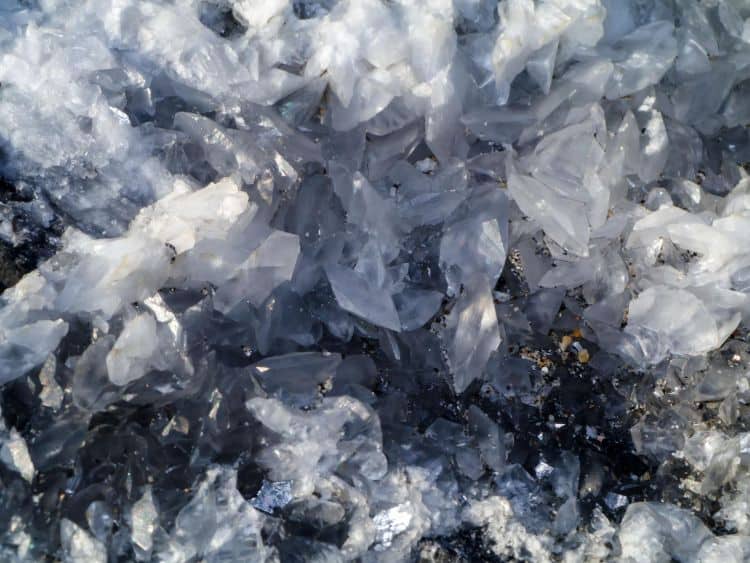
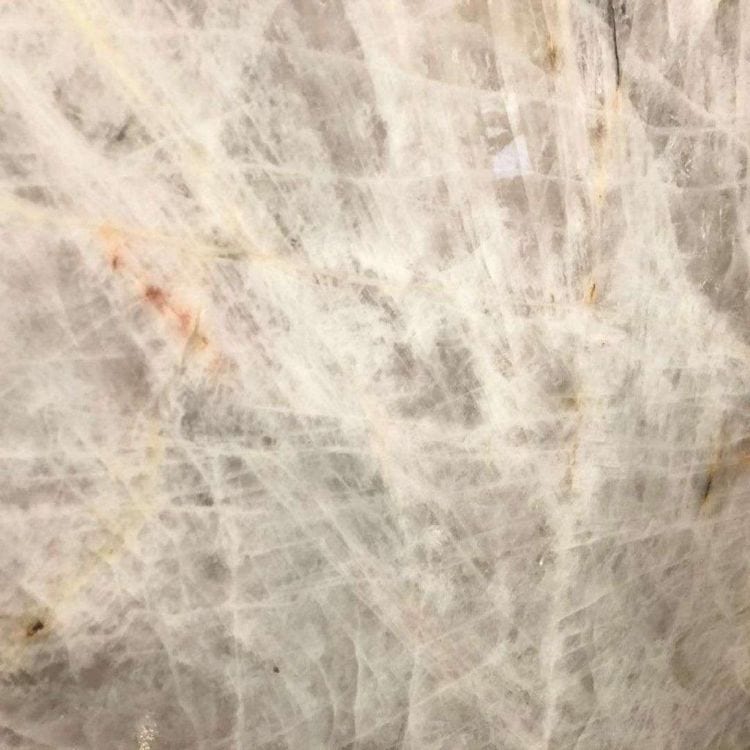
Natural quartz countertops are less common and typically showcase raw quartz crystal structures.
Advantages:
- They offer a distinct crystalline appearance,
- providing a natural and unique look,
- and are made from a durable material.
Disadvantages:
- However, natural quartz is limited in availability as a slab,
- may require sealing,
- and often involves higher costs and sourcing challenges.
Quartzite Countertops
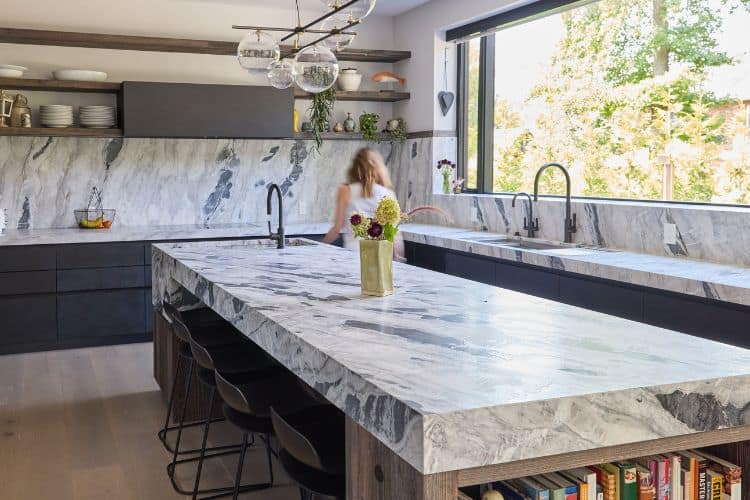
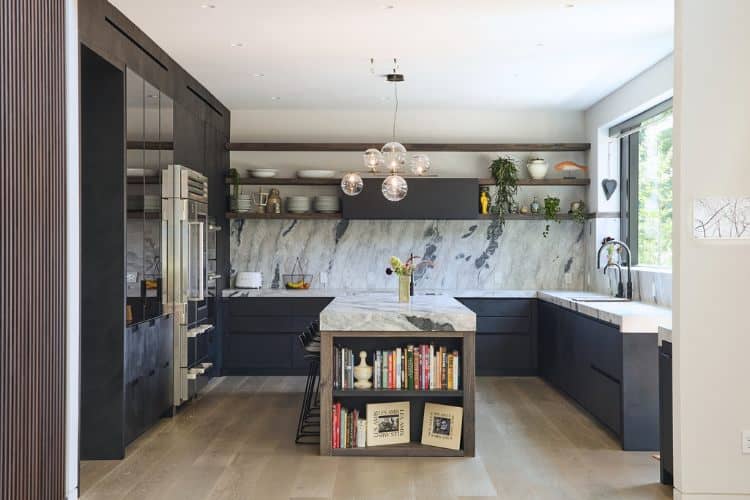
Quartzite is a natural stone formed from sandstone and is often mistaken for marble due to its appearance.
Advantages:
- Extremely durable and harder than granite
- Excellent heat resistance
- Marble-like look with better durability
Disadvantages:
- Requires sealing
- Can be expensive
- Limited color palette compared to quartz
Porcelain (Ultra-Compact Surfaces)
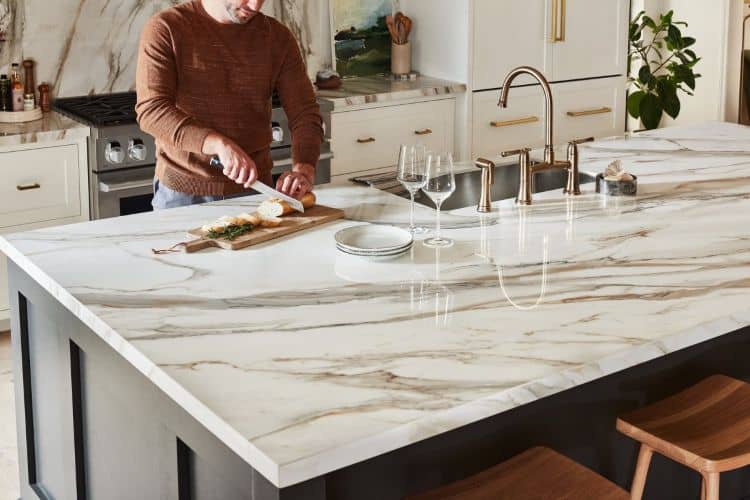
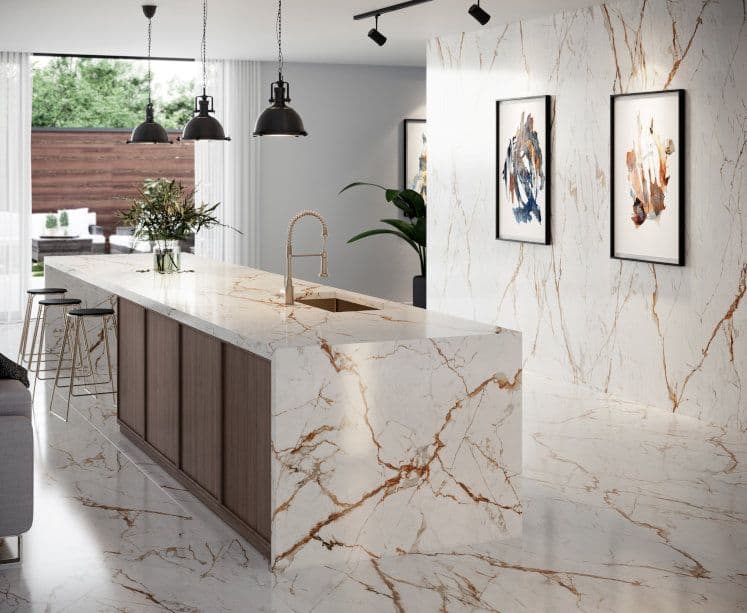
Porcelain countertops are crafted from refined clay that is fired at very high temperatures. This process makes them dense and durable.
Advantages:
- Highly resistant to heat, scratches, and stains
- UV-resistant, so they work well for outdoor kitchens
- Non-porous and hygienic
- Lightweight compared to stone
Disadvantages:
- The edges may be fragile if they are not made correctly.
- Requires specialized installation
- Limited thickness options
Marble Countertops
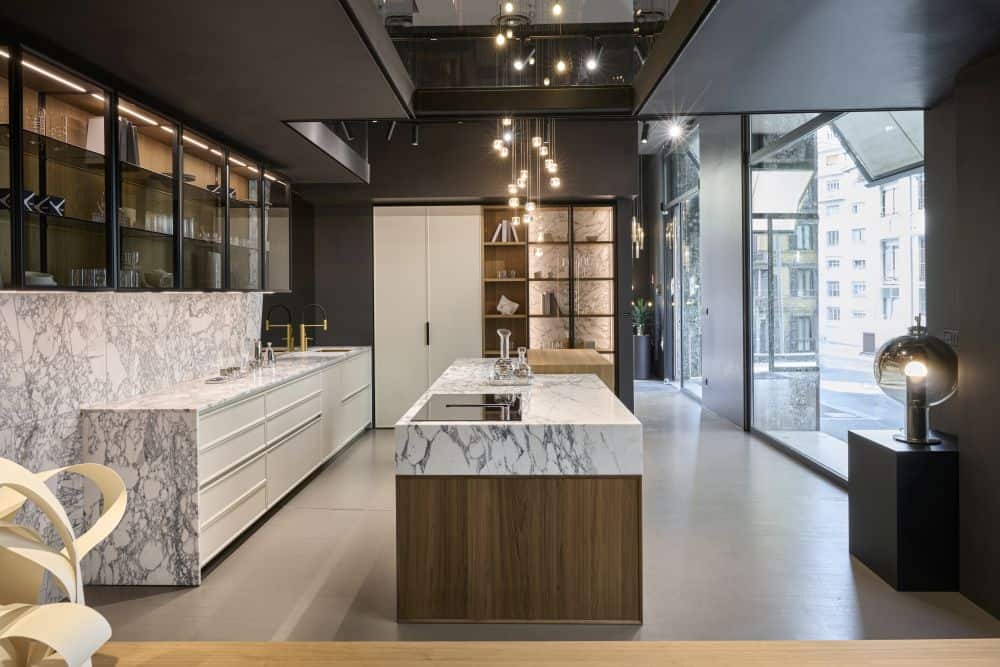
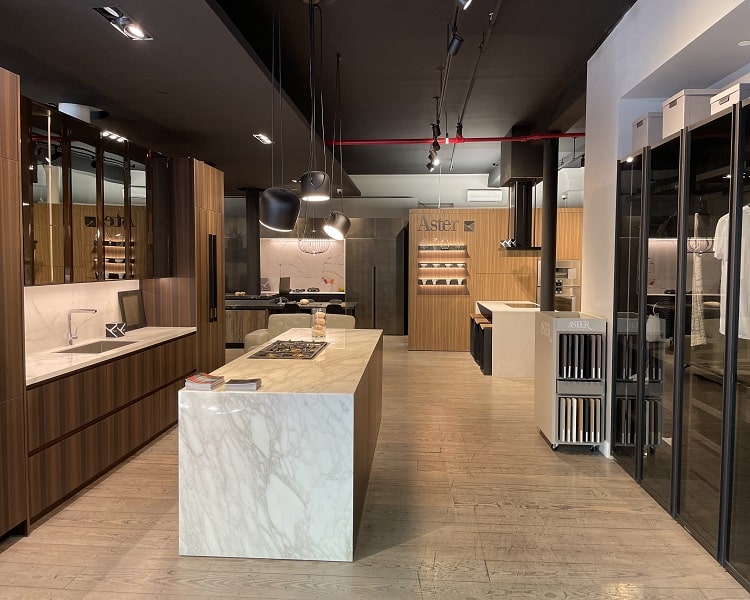
Marble countertops are one of the most iconic and luxurious choices in kitchen design. A natural stone formed from limestone under heat and pressure, marble is prized for its soft veining, elegant movement, and timeless appeal. It has been used for centuries in architecture and continues to define high-end kitchens today.
Key Characteristics
- Distinctive veining patterns (Carrara, Calacatta, Statuario)
- Naturally cool surface—ideal for baking and pastry work
- Soft, refined aesthetic that works in both classic and modern kitchens
Advantages
- Timeless beauty: Marble offers a level of elegance that few materials can match
- Unique slabs: Every piece is different, adding exclusivity to the design
- Adds value: Often associated with luxury real estate and premium kitchens
- Heat resistant: Handles hot pots better than many engineered materials.
Disadvantages
- Porous material: Can absorb liquids and stain if not sealed properly
- Prone to etching: Acidic substances (lemon, vinegar, wine) can dull the surface
- Softer stone: More susceptible to scratches and wear compared to granite or quartzite
- Maintenance required: Needs regular sealing and mindful use