
Why European Kitchen Cabinets Are More Attractive Than Domestic Cabinets
When homeowners, architects, and designers compare European kitchen cabinets vs domestic cabinets, the differences extend far beyond appearance. From advanced manufacturing technology to superior hardware, materials, and a design culture led by Italy, European cabinetry delivers refinement and innovation that most domestic cabinet brands struggle to match. One defining factor is often overlooked: European kitchens are finished using industrial lacquer painting systems—while most domestic cabinets are simply painted on wood surfaces.
1. European Manufacturing Is Built Specifically for Kitchens:
European cabinet manufacturers design factories exclusively for kitchen production, not for general woodworking or furniture making. These facilities invest heavily in:
- CNC machining centers
- Automated edge-banding systems
- Robotic spray-finishing rooms
- Precision assembly and quality-control lines
This purpose-built approach ensures consistent quality, whether producing a single custom kitchen or large-scale residential projects.
2. Most High-End Cabinet Hardware Is European-Made
Despite common assumptions, the majority of premium kitchen hardware is manufactured in Europe, including:
- Soft-close hinges
- Full-extension drawer systems
- Lift-up and pocket-door mechanisms
- Interior organization systems
European hardware leads the market due to advanced engineering, extensive lifecycle testing, and long-term reliability. European cabinets are designed around this hardware from inception, not added as an afterthought.
3. Advanced European Machinery Creates Superior Fit and Finish
European cabinetry benefits from state-of-the-art manufacturing machinery, much of it developed in Italy, Germany, and Austria.
This technology enables:
- Laser or zero-joint edge banding
- Perfectly aligned reveals
- Flat, stable doors over time
- High-performance finishes
The investment required for this level of machinery places it beyond the reach of most domestic cabinet shops, which rely more heavily on manual processes.
4. European Lacquer Painting Systems vs Domestic Paint-on-Wood MethodsOne of the most critical—and visible—differences between European and domestic cabinets is how they are finished.
European Lacquer Painting Systems
European manufacturers use industrial lacquer coating systems, designed specifically for cabinetry and architectural panels. These systems involve:
- Multi-layer lacquer applications
- UV or controlled curing environments
- Automated spray lines with robotic consistency
- Sealed, climate-controlled finishing rooms
Lacquer is applied to engineered panels, not raw wood, resulting in:
- Extremely smooth, uniform surfaces
- Consistent color across all components
- Higher resistance to moisture, heat, and UV exposure
- Finishes that remain stable and refined over time
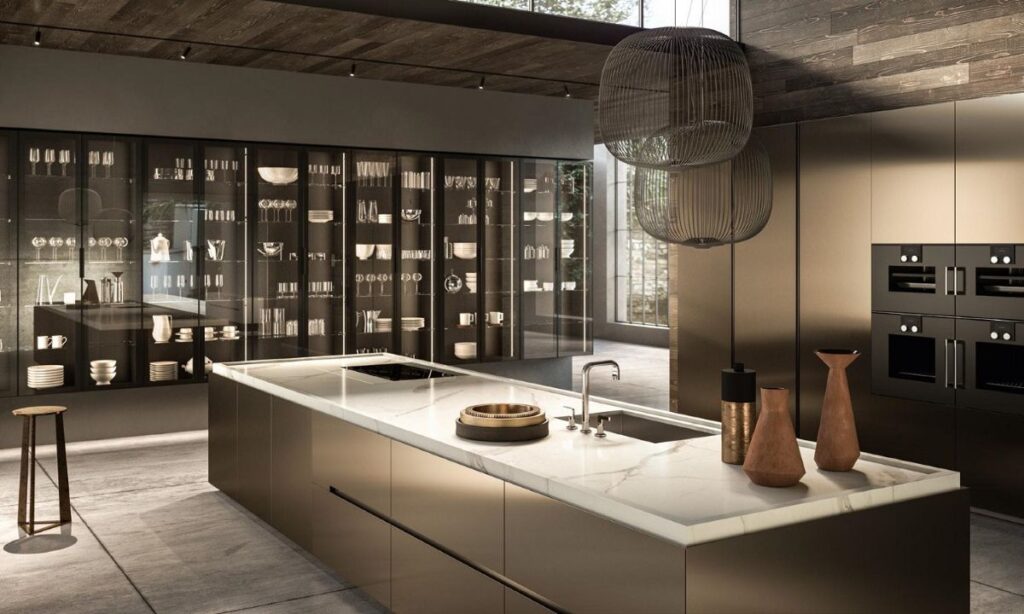
This is why European kitchens achieve flawless matte, satin, and high-gloss finishes that feel more like automotive or architectural coatings than paint.
Domestic Paint-on-Wood Methods
Most domestic cabinets are finished by spraying paint directly onto wood or MDF surfaces. While this can look attractive initially, it often results in:
- Visible grain telegraphing
- Inconsistent texture and sheen
- Greater sensitivity to humidity and temperature changes
- Cracking, joint lines, or finish movement over time
Because wood naturally expands and contracts, painted surfaces are far more prone to visible wear—especially in kitchens, where heat and moisture are constant factors.
This fundamental difference in finishing technology is one of the main reasons European cabinets look cleaner, smoother, and more refined.
5. European Materials Are Engineered for Kitchen Performance
European kitchen cabinets rely on engineered materials developed specifically for kitchen environments, including:
- High-density, low-emission panels
- Moisture-resistant cores
- FSC-certified woods
- Advanced laminates and technical lacquers
Strict European performance and environmental standards ensure durability under daily use, humidity, and temperature variation.
6. Italian Design Adds a Level That Does Not Exist in North America
European—and especially Italian—kitchen cabinetry operates at a different design level.
Italian kitchen design integrates:
- Architecture
- Industrial design
- Fashion sensibility
- Ergonomics
- Material innovation
Designers work directly within manufacturing environments, ensuring design and production evolve together.
In North America, cabinetry is often treated as:
- A construction product
- A storage solution
- A standardized commodity
In Italy, the kitchen is conceived as:
- A living environment
- A design object
- A cultural expression
This philosophical difference produces:
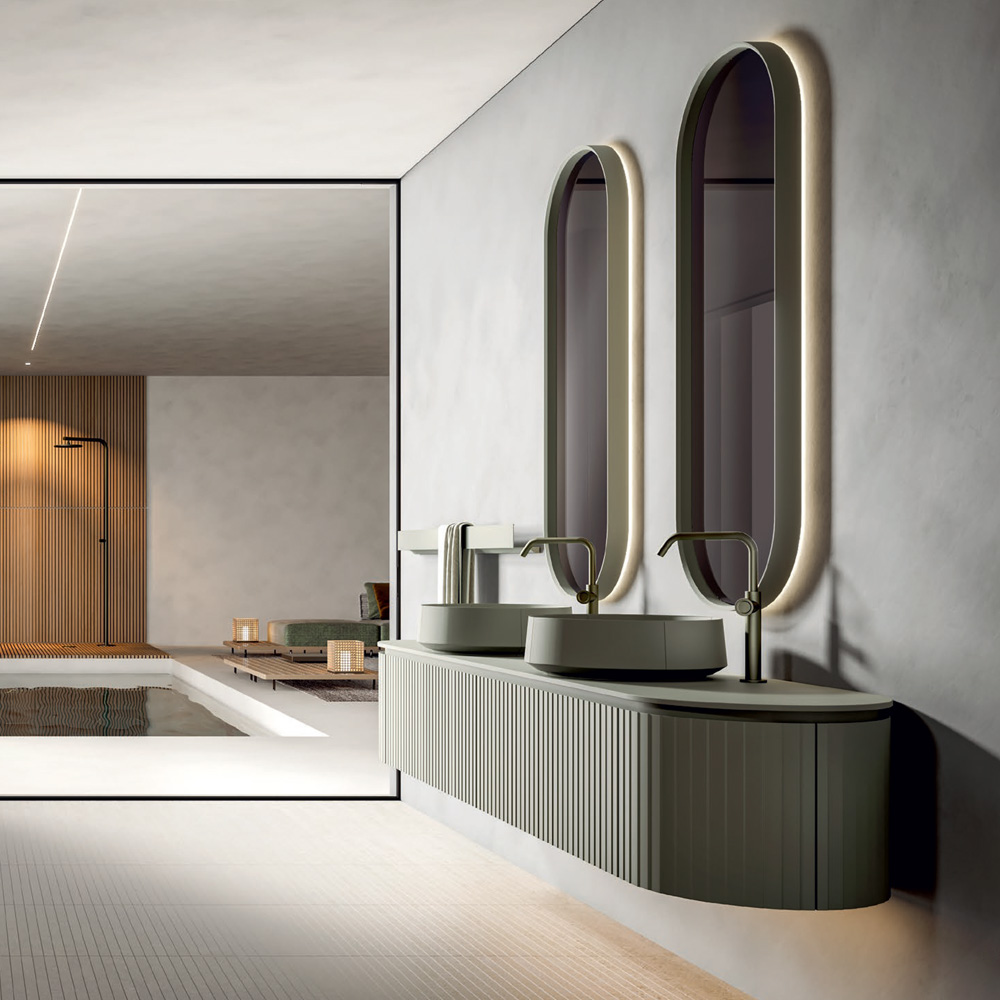
- Softer geometries and curved forms
- Floating volumes
- Integrated handles and shadow gaps
- Seamless appliance integration
This level of integrated, design-led thinking does not exist at scale in North America.
European vs Domestic Cabinets: The Real Difference
European—especially Italian—kitchen cabinets are more attractive because they combine:
- Superior European hardware
- Advanced manufacturing machinery
- Engineered kitchen-specific materials
- Industrial lacquer painting systems instead of paint-on-wood finishes
A design culture led by Italy that does not exist in North America
Domestic cabinets can be well-built—but European kitchens are designed, engineered, and finished as a cohesive architectural product, not simply painted and assembled.