
Melamine and laminate are both decorative surfaces added to an engineered-wood core, usually made from particleboard or MDF. The main difference between them is how they are made and how durable they are.
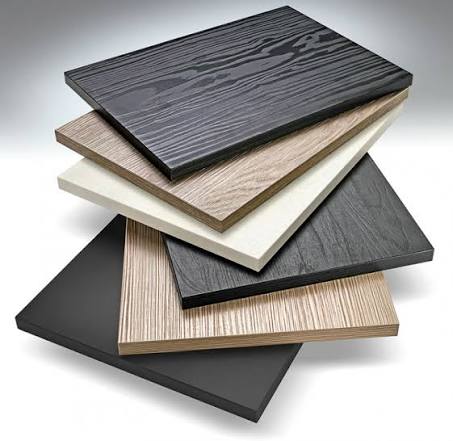
What Is Melamine?
Melamine, also known as thermally fused laminate or TFL, is made by saturating decorative paper with melamine resin and thermally fusing it directly to a particleboard or MDF panel. Because the decorative layer is fused directly to the board, no separate adhesive layer is normally required. The result is a practical, easy-to-maintain surface available in a wide range of colors, wood grains, textures, and patterns.
Melamine is commonly used for:
- Cabinet interiors
- Shelves
- Drawer interiors
- Closet and wardrobe systems
- Cabinet doors and exterior panels
- Cost-conscious residential and multi-unit projects
Standard melamine is thinner than high-pressure laminate, but premium European melamine has improved considerably and can now provide excellent appearance and performance.
What Is Laminate?
When cabinetry professionals refer to laminate, they generally mean high-pressure laminate, or HPL. HPL is manufactured by pressing several layers of resin-treated paper together under high pressure and heat. The finished laminate is created as a separate sheet and then bonded to an MDF, particleboard, or other suitable core. Because HPL contains multiple layers, it is generally thicker and more resistant to impact, abrasion, stains, heat, and heavy use than standard melamine.
Laminate is commonly used for:
- Kitchen cabinet doors
- Finished side panels
- Countertops
- Work surfaces
- Commercial cabinetry
- High-traffic residential applications
- High-traffic residential applications
Areas requiring increased wear resistance-traffic residential
| Feature | Melamine (TFL) | High-Pressure Laminate (HPL) |
| Manufacturing Process | Paper & resin fused directly to MDF/particleboard core | Multi-layer sheet compressed under high pressure, then glued to core |
| Thickness & Density | Ultra-thin surface layer | Thicker, multi-layered protective sheet |
| Impact & Scratch Resistance | Moderate (good for normal everyday use) | High (resistant to heavy impact, chips, and scuffs) |
| Moisture Resistance | Core vulnerable if edges aren’t laser-sealed | Better surface resistance; requires seamless edge-banding |
| Finish Options | Realistic wood grains, matte, textured | Expansive range of high-gloss, ultra-matte, stone, and metallic textures |
| Relative Cost |  (Budget to Mid-Range) (Budget to Mid-Range) | (Mid-Range to Premium) |
An easy way to think about it is that melamine is fused right onto the cabinet board, while HPL laminate is made as a separate, stronger sheet and then glued to the board.
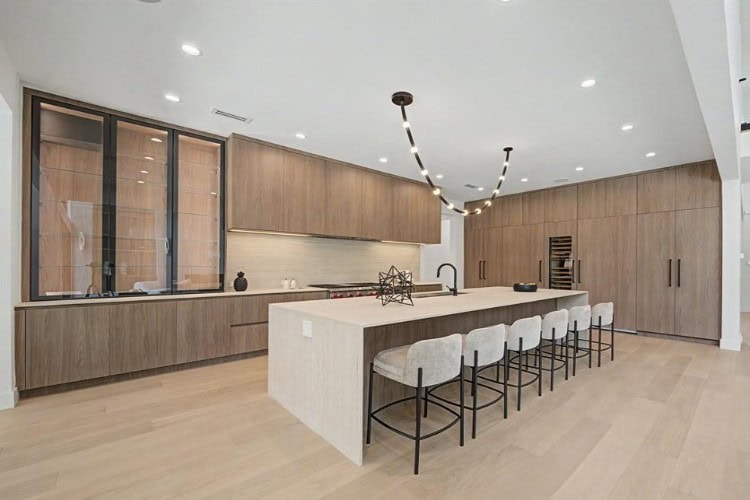
Kitchen with melamine door in NJ house.
The History and Evolution of Laminate and Melamine in Kitchen Cabinetry
The Early History of Laminate: 1910s–1930s
The 1950s–1960s: Laminate Transforms Modern Kitchens
The Development of Melamine in Furniture Manufacturing
The 1980s–2000s: European Manufacturing Advances
Modern Laminate and Melamine: From Practical Materials to Premium Design
Laminate and Melamine in Today’s European Kitchens
Which is better for kitchen cabinets?
- Melamine is a practical and affordable option for cabinet interiors and shelves. Good-quality European melamine can also be a solid choice for cabinet doors.
- HPL laminate is usually a better pick for exterior doors and panels that get cleaned often or face a lot of bumps, moisture, or heavy use.
- Neither material is fully waterproof. It’s important to seal the edges well, since water can damage the particleboard or MDF core if it gets in *
* Neither material is completely waterproof. However, most premium European kitchen manufacturers produce highly water-resistant cabinet doors using advanced, high-end edge-banding machinery. These systems create an extremely tight and nearly seamless bond between the panel and its edges, significantly limiting the possibility of moisture reaching the particleboard or MDF core. This protection has limits. Prolonged exposure to standing water, steam, damaged edges, or improperly sealed joints can still allow moisture to penetrate the core and cause swelling. For this reason, spills should be wiped up promptly, and the edges around sinks, dishwashers, and other wet areas should remain properly protected.
People sometimes use the word “laminate” to describe both products. When you’re comparing cabinets, ask if the surface is direct-pressure melamine or high-pressure laminate (HPL). That difference is more important than the marketing name.
Key Considerations for Kitchen Cabinets
1. Water and moisture resistance
Melamine and HPL are no more inherently 100% waterproof than other materials since both of them use an engineered wood core (either particleboard or MDF). Nevertheless, modern custom cabinets make use of advanced PUR (Polyurethane) and laser edge-banding technology, which results in a nearly seamless, micro-thin edge joint that stops steam, water droplets, and humidity from getting to the core beneath.
2. Durability in areas with heavy use
In New York City apartments and in busy family kitchens where doors are often opened, bumped against or wiped down, HPL laminate provides a higher resistance to scuffs and accidental knocks. When it comes to cabinet interiors, shelving and doors that are subject to less impact, melamine achieves the same visual appearance at a lower price.
3. Visual Appeal and Texture
Both of the materials are good at imitating natural materials such as oak, walnut, marble, and concrete; the premium European ranges available via Urban Homes’ custom cabinetry design have synchronized pore textures which replicate the feel of real wood grain as well as the visual pattern.
Frequently Asked Questions
Q. What is better for apartment kitchens in NYC: laminate or melamine?
A. For apartment kitchens in New York City that see a lot of use we suggest using HPL laminate or premium European melamine with laser edge-banding since these materials resist scuffs, daily wear, and cleaning products much better than ordinary thin melamine.
Q, Is it possible to waterproof laminate and melamine kitchen cabinets?
A. Neither of the materials is completely waterproof since both of them have an engineered wood core (either MDF or particleboard). But in the case of high-end European cabinet doors, an advanced edge-banding technology is used to produce a tight, water-resistant seal which keeps moisture out.
Q. Is it possible to tell the difference between melamine and laminate cabinets when looking at them?
A. Premium melamine and HPL laminate may appear exactly the same when seen, particularly in modern wood-grain or solid matte finishes. The actual difference is in their weight, thickness, and resistance to wear when used heavily.