
For the majority of the past ten years, the all-white kitchen has been the typical answer to the concept of luxury—bright, clean, safe, and commonly found. Yet things are now beginning to change. Both homeowners and designers are moving towards cabinets that have a warm look, a grain pattern and depth. Natural wood has made a comeback and now occupies a central position in high-end kitchen design, and this is not just a passing fashion—it’s a correction. Aside from its aesthetic value, wood cabinetry has real benefits in that it hides fingerprints and scuffs better than white finishes and its natural colors match so well with a wide range of design schemes.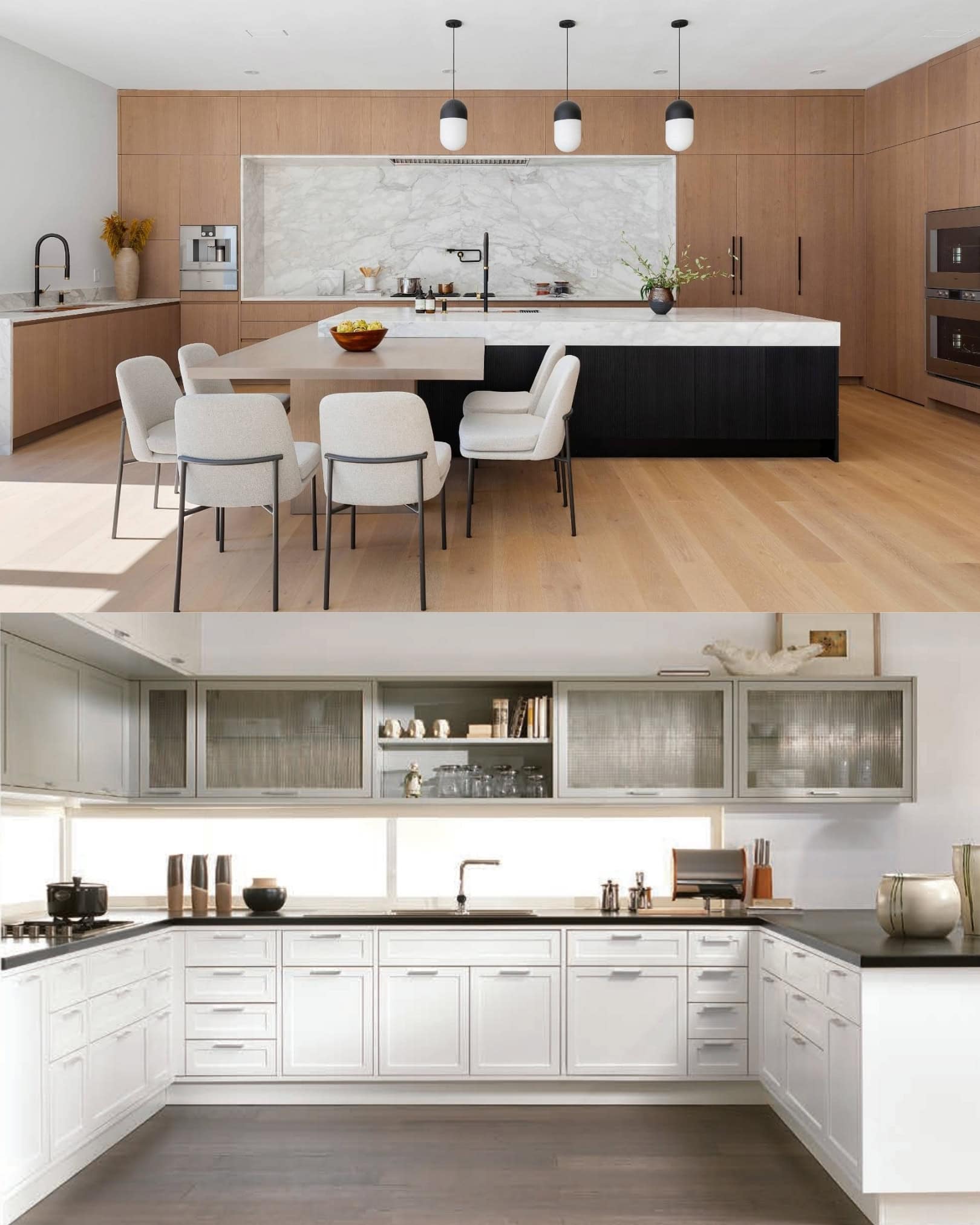
White Is No Longer the Default
People who are today’s home owners expect their kitchen to seem thought out rather than based on a standard design; this is causing a move towards more substantial materials, with natural wood at the forefront of this trend.
Why Wood Is Winning in 2026
- A preference for texture rather than uniformity is being shown by designers, who are now combining different materials — such as wood, stone, and metal — rather than having everything match a single finish.
- Warmth is now being regarded as a design value, with cool grays and stark whites being replaced by more grounded, natural tones so that a kitchen seems to have been genuinely used rather than merely arranged.
- The skill involved is once again clear to see. The grain of the wood shows exactly what it is like. One of the reasons that people prefer it is that this kind of transparency enables you to see the quality, rather than just having to match a paint colour. Among the more popular types, such as walnut, white oak and ash, all of them are becoming more widely chosen, each with its own individual character—walnut gives deep and rich shades, white oak provides a lighter and more modern appearance, and ash has its own particular grain patterns. Because of these choices, homeowners are able to picture a kitchen that suits both their space and their style.
It also deals with a design problem resulting from the use of all-white kitchens in open-plan houses; in this situation, when the kitchen is visible from the living and dining area, the solid block of white cabinets looks cold or clinical next to upholstered furniture, wood flooring and warmer decorations; by using natural wood cabinets this gap is filled and the kitchen then seems to be part of the same room rather than a separate and sterile area.
Where Timeline Fits
This is exactly the kind of space that Aster Cucine’s Timeline range was meant for. The Timeline collection brings together the straight lines typical of Italian cabinetry with real wood finishes, walnut being the main example, so that you get the warmth of a natural material without losing the precision which is typical of Italian design. As is well known, there are similar styles of wooden cabinetry available from a great many other high-end brands and custom cabinet makers, and so homeowners have a wide range of choices outside of just one particular collection. Walnut in particular is doing a lot of work in 2026 kitchens:
- Although it is rich it does not appear flashy; walnut has a refined look which dark stains and painted colours generally do not.
- It pairs well with nearly everything: book-matched stone islands, brass or matte black hardware, warm stone flooring—walnut is still underneath all of these without having to compete.
- It ages in a manner appropriate to luxury materials, since real wood gains character over time while a white lacquer finish does not.
It also provides designers with the same degree of flexibility that an all-white scheme has. The Timeline can be designed as a full walnut kitchen to produce a striking effect with a strong emphasis on wood, or as a design incorporating more than one material—for example, walnut lower shelves with a lacquered or stone-faced upper section—thus adding a warm atmosphere without making the room excessively warm. It has therefore become one of the most popular items in the range as this trend has developed.