
NYC Kitchen Renovation Costs & Code Guide: Co-Ops, Condos, & Townhomes
Renovating a kitchen in New York City is a very different experience compared to updating a kitchen in the suburbs. In addition to choosing luxury cabinets, stone countertops, and high-end appliances, homeowners in NYC also have to deal with strict co-op rules, Department of Buildings (DOB) regulations, and complicated building logistics. No matter if you are remodeling a pre-war co-op on Park Avenue, a modern condo in Tribeca, or a brownstone in Brooklyn, this guide will help you understand realistic renovation budgets, important rules, and project timelines for New York City.
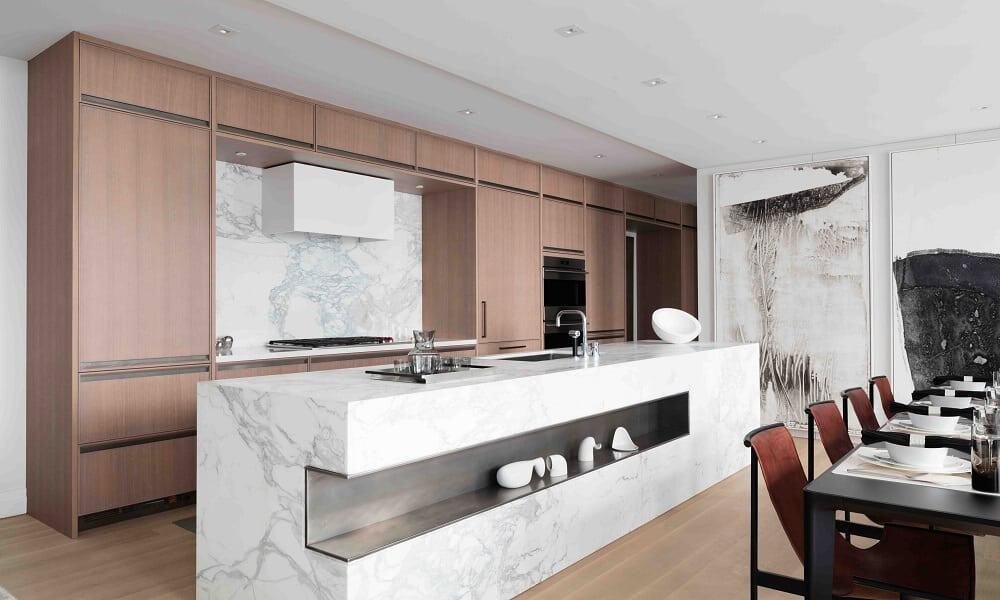 A stylish, contemporary kitchen with marble countertops, wooden cabinets, and modern appliances, perfect for NYC townhouse.
NYC Kitchen Renovation Cost Breakdown
Kitchen renovation costs in New York City are driven by two main factors: material specifications (custom Italian cabinetry, integrated appliances, natural stone slabs) and site logistics (building restrictions, union labor requirements, and permit filings).
| Property Type | Mid-Range Renovation | Luxury Custom Kitchen | Major Cost Drivers |
| NYC Co-Op / Condo | $75,000 – $120,000 | $150,000 – $300,000+ | Alteration fees, COI requirements, limited work hours, padded elevator rules |
| Manhattan Townhome | $100,000 – $180,000 | $200,000 – $400,000+ | Structural beam installation, plumbing stack relocation, landmark approvals |
| Tri-State Suburban | $60,000 – $100,000 | $120,000 – $250,000+ | Outdoor venting runs, open-concept wall removal, premium appliance packages |
Understanding Labor and Building Logistics Costs
In NYC multi-family buildings, trade labor costs represent a significantly higher percentage of the overall budget than in single-family suburban homes. Building management rules typically restrict construction to strictly 9:00 AM – 4:00 PM, Monday through Friday, with no weekend work allowed. These compressed working windows extend project timelines, directly impacting trade labor expenses.
High-End Material & Finish Allowances
For a luxury kitchen, material allocations typically break down as follows:
Custom Italian Cabinetry: $45,000 – $120,000+ (depending on finish, glass fronts, and internal organizational hardware)
Appliance Package (Sub-Zero, Wolf, Miele, Gaggenau): $25,000 – $60,000
Countertops & Backsplash (Quartzite, Porcelain Slabs, Marble): $12,000 – $30,000
Architectural Lighting & Plumbing Fixtures: $8,000 – $20,000
Navigating NYC Building Codes, Permits, and Approvals
Before any demolition can begin, your renovation plans must pass through several layers of review. Skipping or rushing these steps can result in heavy board fines, stop-work orders, or delays during resale.
Co-Op Alteration Agreements and Board Reviews
Co-op boards maintain strict control over modifications made to their buildings. The alteration agreement outlines required insurance coverage limits (often requiring $5M+ in general liability), security deposits, and specific restrictions on work types.
Wet-Over-Dry Restrictions: Many co-ops strictly prohibit extending a kitchen footprint over a bedroom or living room space below.
Architect Review Fees: You will likely be required to pay for the building’s independent architect to review your MEP (Mechanical, Electrical, Plumbing) drawings.
Summer Work Windows: Certain luxury buildings only allow major renovations between Memorial Day and Labor Day.
DOB Permits & Master Plumber/Electrician Filings
Cosmetic updates—like swapping out existing cabinets and countertops in the exact same footprint—rarely require Department of Buildings (DOB) permits. However, you must file with the DOB if your project involves:
Relocating gas lines or water supply lines.
Removing or opening up structural or load-bearing walls.
Upgrading electrical subpanels to support high-draw appliances (like induction cooktops or double wall ovens).
Landmark Preservation Commission (LPC) Guidelines
If your home is located in a designated Historic District (such as Brooklyn Heights, Greenwich Village, or the Upper West Side), exterior modifications—including rear-facade exhaust vent penetrations or new window openings—require prior approval from the Landmark Preservation Commission (LPC).
Cabinetry and Material Selection for NYC Spaces
Selecting materials for an urban kitchen requires balancing refined luxury design with spatial efficiency and structural limitations.
European Frameless Cabinetry vs. Traditional Inset
Full-access, frameless Italian cabinetry maximizes every interior millimeter of storage. Without the face-frames found in traditional cabinetry, modern European designs offer deeper drawers and full-height door access—making them the preferred choice for compact urban layouts.
Countertop Slab Logistics: Elevator vs. Crane Hoist
When selecting continuous stone slabs (such as Calacatta marble or large-format porcelain) for an island, always verify your building’s service elevator dimensions early in the design phase.
Elevator Fit: Slabs exceeding 9 feet often cannot fit inside standard residential service elevators or stairwells.
Crane/Hoist Requirements: If a slab cannot be transported via elevator, hoisting it through a street-facing window via crane requires additional DOT street closure permits and rigging fees.
Ductless vs. Ducted Venting Solutions
Most NYC high-rise apartments do not have exterior ventilation shafts for kitchen hoods. In these buildings, high-performance recirculating ductless hoods equipped with multi-stage charcoal and HEPA filtration must be used to eliminate grease and cooking odors efficiently.
Frequently Asked Questions (FAQ)
How long does a co-op kitchen renovation approval take in NYC?
Co-op board reviews typically take between 4 to 8 weeks once a complete submission package (architectural drawings, COIs, contractor licenses, and scope of work) is delivered to building management.
Can you move a gas line in a Manhattan apartment kitchen?
Yes, but moving a gas line requires a licensed Master Plumber, DOB permit filings, and a mandatory pressure test. Because gas line inspections can take weeks to schedule with the city, many NYC homeowners opt for high-efficiency induction cooktops, which eliminate gas line complexities entirely while offering faster boiling speeds and sleeker profiles.
What is the average timeline for an NYC luxury kitchen renovation?
A standard high-end kitchen renovation takes 3 to 5 months of active construction. However, when factoring in initial kitchen design, custom cabinetry fabrication lead times (typically 10–14 weeks for imported Italian millwork), and board approvals, the total project timeline spans 6 to 9 months from concept to completion.